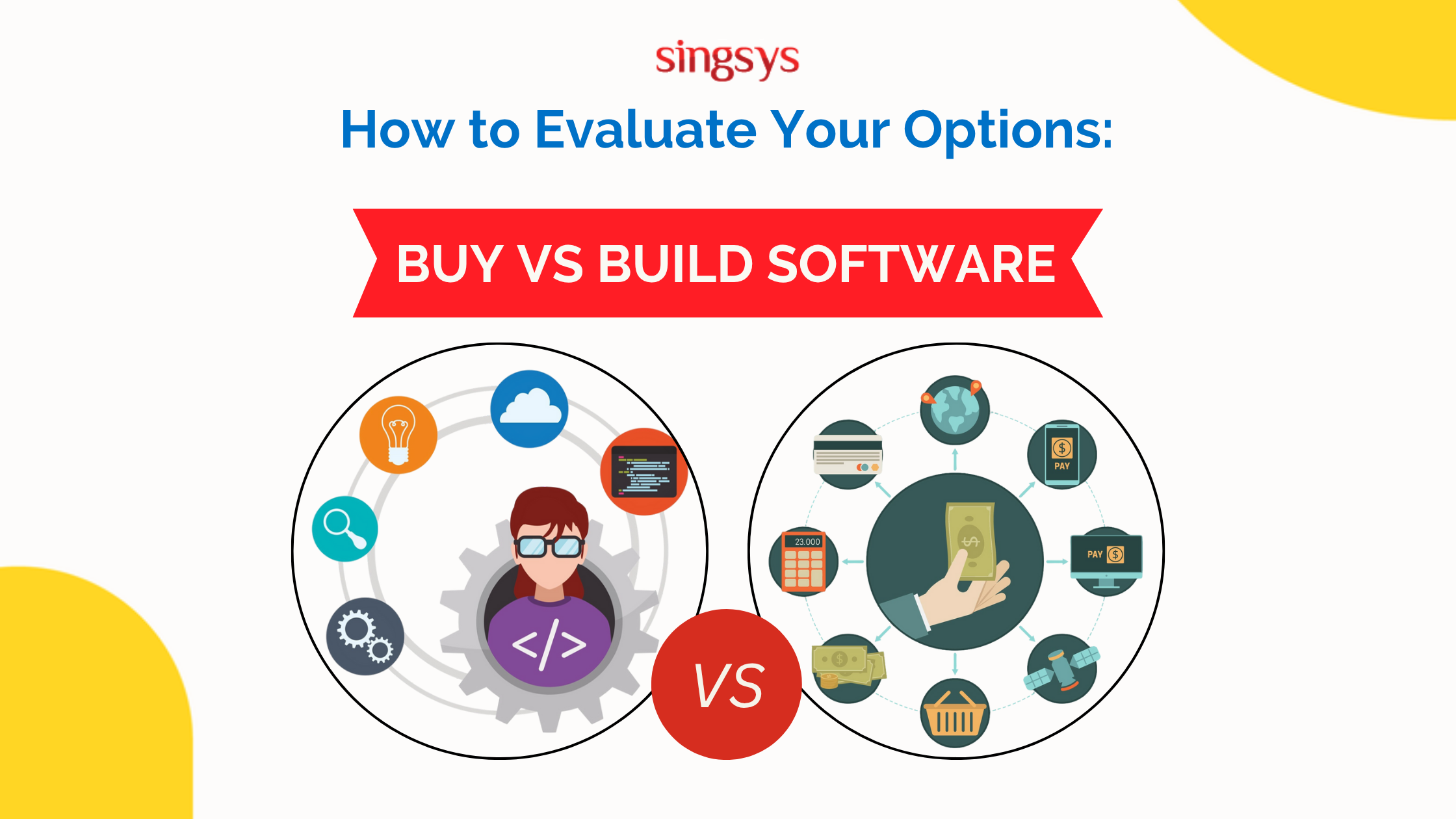
To buy or to build… this is the question businesses must ask when choosing between buying off-the-shelf software or developing custom software to meet their evolving needs.
In many ways, deciding whether to buy software or build it from scratch is like choosing between a ready-made meal and preparing one yourself.
Do you opt for the convenience and speed of pre-made software, like grabbing a meal from the store that is ready to serve in minutes? Or do you invest time and resources in creating custom software, like cooking a meal that perfectly fits your exact preferences and dietary requirements?
It is a significant decision for any organisation. And as we enter 2025, the landscape is changing fast—new technologies, market trends, and strategic pressures make this choice more nuanced than ever before.
Purchasing a ready-made meal is much like buying off-the-shelf software. It is quick, easy, and requires little effort beyond selection. You simply choose a product that fits your needs, pay for it, and start using it immediately. The hard work—development, testing, and maintenance—is already done for you.
In the same way, buying off-the-shelf software means you do not need to build something from the ground up. You can select a solution that suits your business requirements and deploy it rapidly.
Benefits of Buying Off-the-Shelf Software
Cost-effectiveness: Off-the-shelf software is typically more affordable upfront. Development costs are distributed across a wide customer base, keeping licensing and subscription fees lower than building a solution from scratch.
Ease of use: Commercial software is often designed with user experience in mind, making it accessible for non-technical users and ensuring a smoother onboarding process.
Quick deployment: Off-the-shelf products can be implemented in a matter of weeks—ideal for organisations that need immediate solutions to pressing challenges.
Proven solutions: Many established products come with a track record of reliability and performance. They have been tested and refined through years of customer feedback.
Updates and vendor support: Vendors manage ongoing updates and provide customer support, reducing the burden on your internal IT resources. This is particularly valuable in a rapidly changing landscape where regular updates ensure security and compliance.
The 2025 Context for Buying
In 2025, buying is more attractive than ever for many scenarios:
The global software industry is growing at 11% annually, creating a broad marketplace of mature, reliable solutions.
API-first products make it easier than ever to integrate off-the-shelf tools with your existing systems.
Many organisations pursue hybrid strategies, buying core functionality and integrating custom components as needed.
Building Custom Software
Now, think of preparing a meal from scratch. Instead of settling for what is available off the shelf, you select your ingredients, substitute items as needed, and control the preparation process to deliver a result tailored precisely to your tastes.
Building custom software works the same way. You can craft a solution designed around your exact business needs and processes. This offers greater control—but also requires more time, investment, and expertise.
Benefits of Building Custom Software
Tailored to your needs: Custom software is purpose-built for your organisation’s specific requirements. You determine every feature, integration, and workflow.
Increased efficiency: A well-designed custom solution can streamline business processes and eliminate inefficiencies that off-the-shelf products cannot address.
Scalability: As your organisation grows, your software can scale with it. You are not limited by a vendor’s roadmap or product constraints.
Competitive advantage: Custom software can deliver unique capabilities that set your organisation apart. In 2025, 62% of technology executives say they are ready to invest more boldly in tech to drive differentiation—custom development is one avenue for achieving this.
Build with confidence: If your business is considering a custom software project, working with an experienced partner is essential. Singsys, a trusted name in software development, offers expert services to help you design and build innovative solutions that drive real business value. From strategy to execution, Singsys ensures your custom software delivers both performance and flexibility.
The 2025 Context for Building
The rise of AI is making custom builds more powerful and accessible. Companies investing in AI-driven software see a 15% performance improvement on average.
Cloud-native development and low-code platforms reduce the time and complexity of building robust, scalable applications.
Many organisations take a modular approach, building only what differentiates them while leveraging commercial tools for standard functionality.
That said, building custom software requires significant resources:
Technical debt can quickly accumulate—20–40% of technology value is often consumed by technical debt if ongoing investment is neglected.
Security must be prioritised, as breaches cost an average of $4.88 million per incident.
How to Choose: Buying vs Building Software
Choosing between buying and building is not always straightforward. Here are key questions to help guide your decision:
What are your business’s specific needs?
Do your operations rely on highly specialised processes? If so, custom software may offer significant advantages. Conversely, if your needs are largely standard (for example, payroll, HR, CRM), off-the-shelf solutions are likely sufficient.
Are suitable solutions already available?
In many cases, proven commercial products already meet core needs. With rich APIs, off-the-shelf tools can often be extended or integrated to meet more niche requirements, eliminating the need for a full build.
Is there a competitive advantage in building?
Custom software can deliver capabilities that give your organisation an edge. The maxim holds true: “Buy for parity, build for competitive advantage.”
What is your budget?
Buying is generally more cost-effective in the short term. Building requires a larger upfront investment but can yield long-term savings if the software delivers clear operational advantages.
What are the total costs?
Look beyond upfront costs. Consider the total cost of ownership, including licensing fees for bought solutions and ongoing maintenance for custom-built software. For example, a $10,000 build might equate to about $200/month in buy costs after four years.
What is your timeline?
If speed is critical, buying is usually the better path. If you have time to invest in crafting an optimal solution, building may deliver greater long-term value.
Does your team have the required expertise?
Building custom software requires a skilled development team and a commitment to ongoing support. If this capability is not in place, buying may be more practical.
What are your support and maintenance expectations?
Off-the-shelf products typically include vendor support and updates. With a custom build, your team must manage all ongoing maintenance and enhancements internally.
The Value of Hybrid Approaches
Increasingly, organisations are pursuing hybrid approaches—buying where it makes sense, and building where differentiation matters.
For example, many companies deploy commercial tools for finance, HR, and basic CRM, while building custom applications for customer experiences, internal workflows, or industry-specific functions.
This approach offers a balanced path, providing the speed and cost advantages of buying while allowing custom innovation where it counts.
Tanu Vishwakarma, a seasoned social media marketer, possesses a passion for promoting businesses online. She specialises in crafting creative strategies to captivate potential customers. Her dedication to staying updated on industry trends ensures that her methods are always effective. Tanu thrives on helping businesses shine in the digital realm.
Singapore has built a strong reputation as a technology and healthcare hub in Asia. From telemedicine and patient engagement platforms to hospital management systems, AI-powered healthcare solutions and digital health […]
The solar energy industry is growing rapidly as businesses, homeowners and organisations increasingly invest in renewable energy. But while solar technology continues to evolve, many solar companies still rely on […]
In today’s competitive digital landscape, users expect mobile applications to perform flawlessly across multiple devices and operating systems. Whether an app is built using React Native, Flutter, Xamarin, or another […]