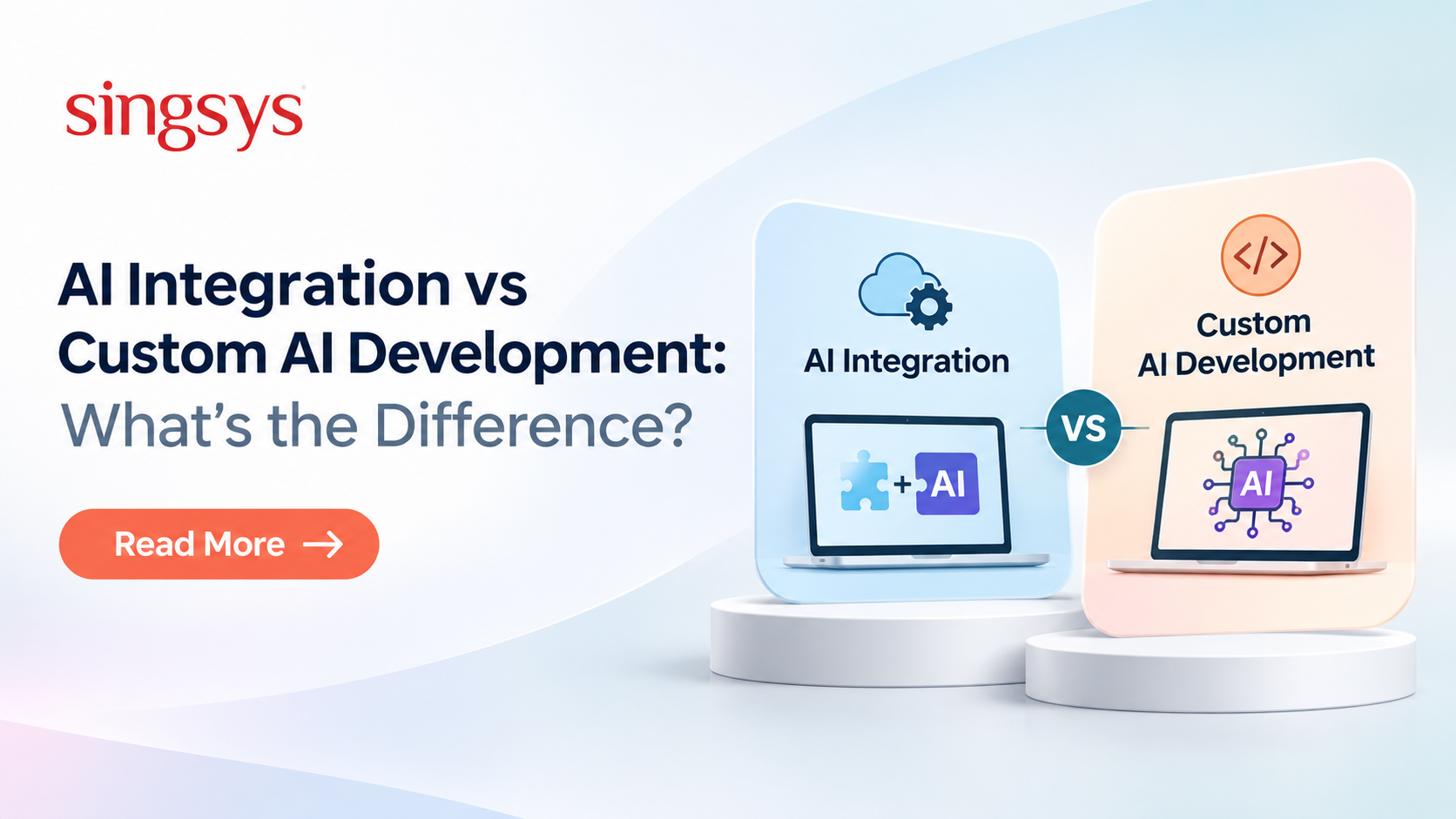
Artificial Intelligence is becoming an essential part of modern business operations. From automating customer support to analysing large datasets, businesses are adopting AI to improve productivity, reduce manual work, and deliver better customer experiences. However, when planning an AI-powered solution, one important decision often arises: should a business integrate existing AI technologies into its applications or invest in custom AI development?
Although these approaches may seem similar, they serve different purposes. AI integration focuses on connecting existing AI models, tools, and platforms with business applications, while custom AI development involves building AI-powered solutions tailored to specific requirements.
Understanding the difference between AI integration vs custom AI development can help businesses choose an approach that aligns with their goals, technical capabilities, and long-term growth plans.
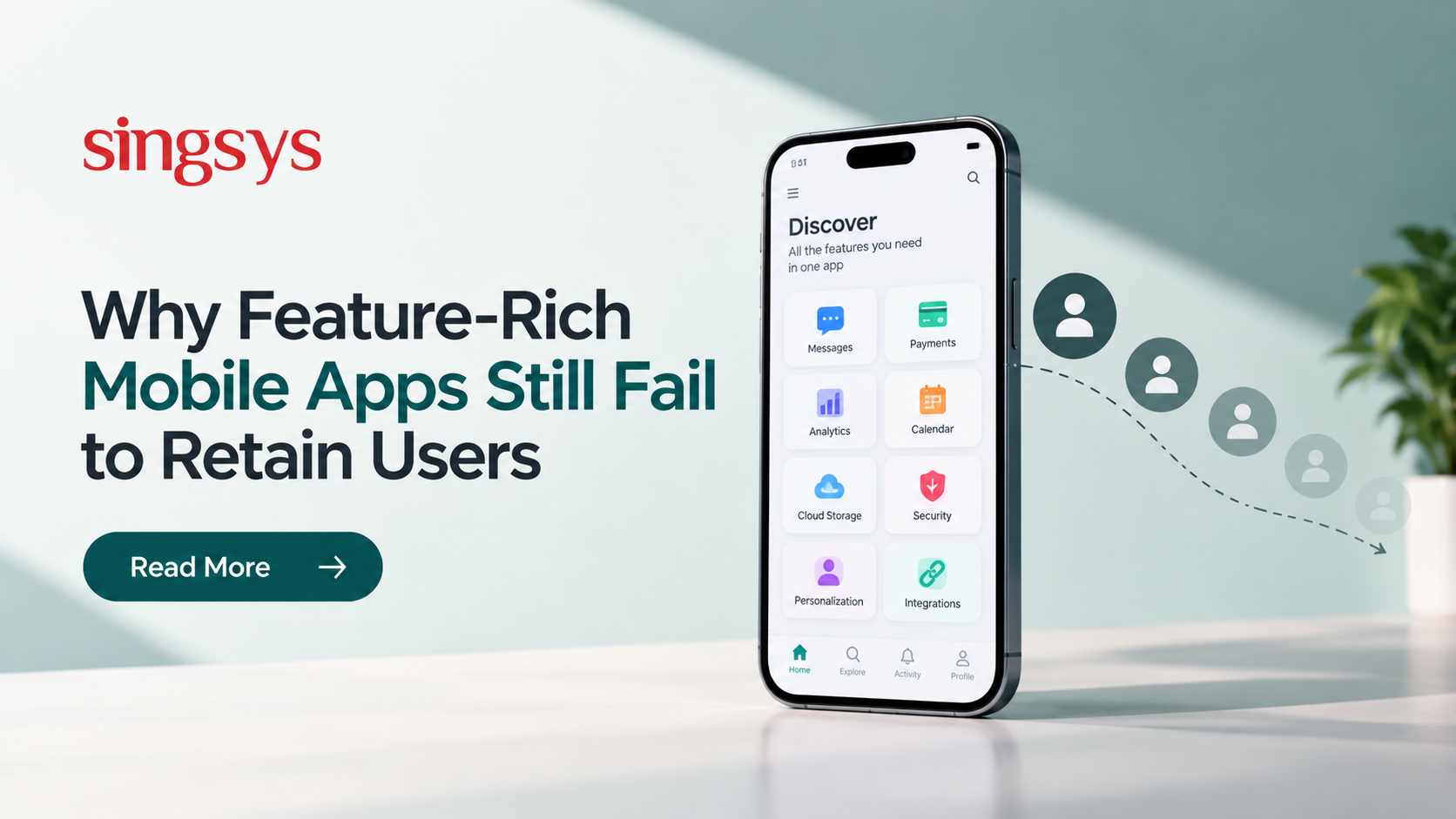
Building a mobile app with advanced features may attract users initially, but getting them to return regularly is a different challenge. Many businesses invest in sophisticated functionality, attractive interfaces, and innovative technologies, yet struggle to maintain consistent user engagement. Downloads may increase after launch, but active users gradually decline as people stop opening the app or uninstall it altogether.
The problem is often not a lack of features. Instead, it comes down to how effectively an app solves users’ problems, fits into their routines, and delivers a satisfying experience.
Understanding why feature-rich mobile apps fail at mobile app user retention can help businesses develop products that encourage long-term engagement rather than focusing solely on downloads and initial adoption.
Weather forecasting has evolved significantly with advances in satellites, radar systems, and atmospheric science. However, predicting weather accurately remains a complex challenge. Sudden thunderstorms, unexpected rainfall, shifting wind patterns, and rapidly developing cyclones can make even advanced forecasts uncertain.
While meteorologists rely on scientific observations and mathematical models, the software behind these systems plays an equally important role. Modern weather forecasting software can process enormous volumes of atmospheric data, improve numerical simulations, and help meteorologists identify patterns that might otherwise go unnoticed.
But can better software actually make meteorology more accurate? The answer is yes, when software improvements are combined with reliable data, advanced scientific models, and expert interpretation.
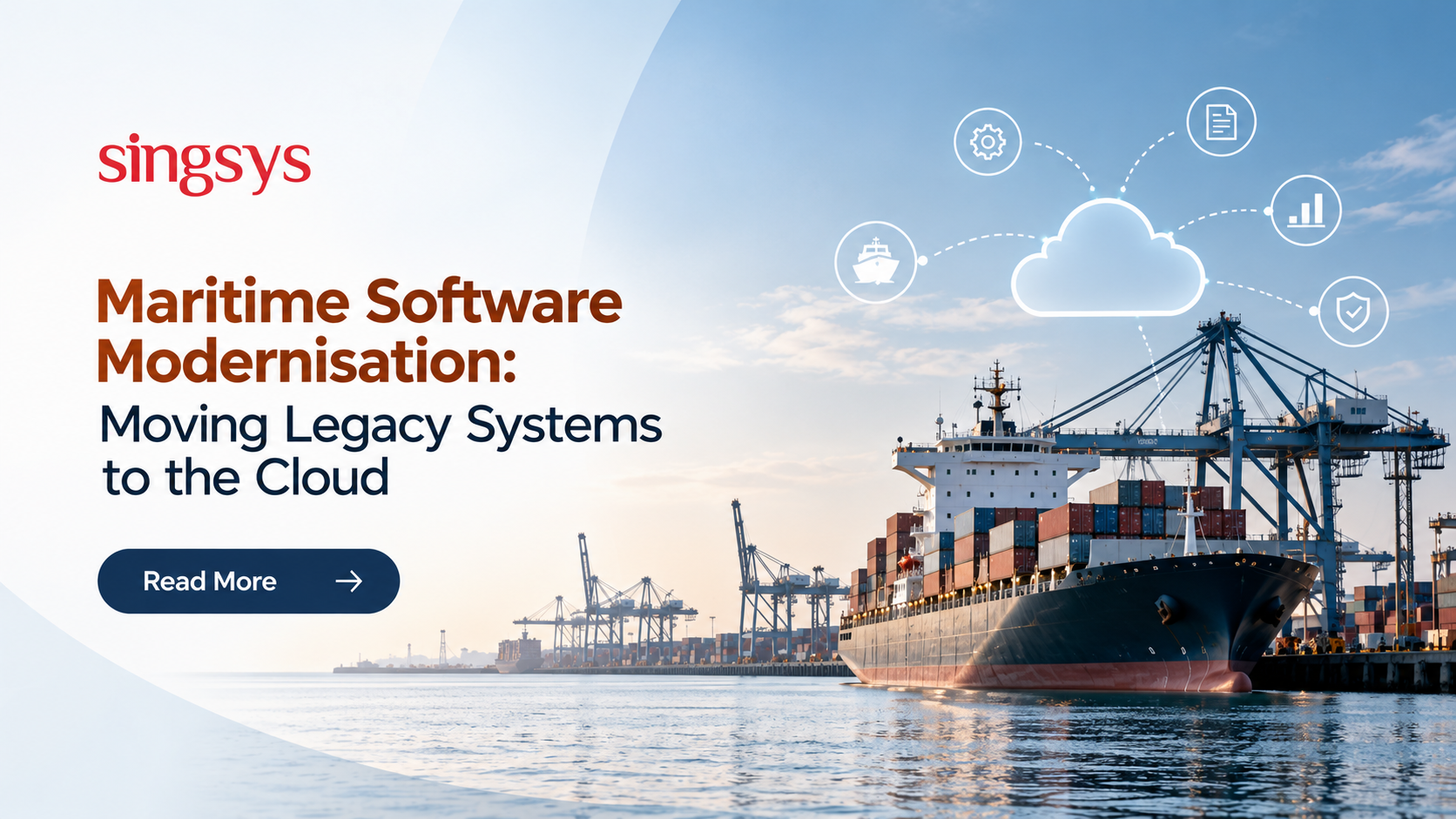
The maritime industry is undergoing a significant digital transformation as shipping companies, port operators, and logistics providers look for ways to improve operational efficiency, visibility, and security. However, many maritime businesses still depend on legacy software systems that were developed years ago. While these systems may support essential operations, they often struggle to meet the demands of modern shipping, real-time data exchange, and connected supply chains.
Maritime software modernisation offers a practical way to overcome these limitations. By migrating legacy applications to cloud-based environments, maritime organisations can improve scalability, strengthen data accessibility, and build a more resilient digital infrastructure.
In this blog, we explore why maritime software modernisation matters, how cloud migration works, and what businesses should consider when upgrading their existing systems.
Online shopping has made purchasing products easier than ever, but convenience alone is no longer enough to satisfy modern consumers. Customers increasingly expect online stores to understand their preferences, recommend relevant products, simplify product discovery, and provide personalized assistance throughout their shopping journey.
This shift is driving the adoption of artificial intelligence in e-commerce, transforming traditional online stores into intelligent shopping experiences. Instead of presenting the same products and offers to every visitor, AI-powered platforms can use customer signals, browsing behavior, and contextual information to make shopping more relevant.
For e-commerce businesses, this transformation creates opportunities to improve customer engagement, streamline operations, and build stronger relationships with shoppers. The future of online retail is moving away from generic product listings toward experiences that feel more personal, intuitive, and responsive.