
Top eCommerce Mobile App Development Companies in India (2026)
If you run an online store—or plan to start one—you already know the truth: everyone is on their phone. In 2026, if your business isn’t on a mobile screen, it’s […]
The construction industry is evolving faster than ever. With tighter deadlines, rising material costs, labour shortages, and increasing compliance requirements, managing construction projects using spreadsheets or manual methods is no longer practical. This is where construction project management apps play a crucial role.
By 2026, the global construction management software market is expected to grow significantly, driven by the increasing adoption of cloud-based solutions and mobile-first platforms. Studies show that digital project management tools can improve project efficiency by 20–30% while reducing cost overruns and communication gaps.
In this blog, we explore the top 5 construction project management apps for 2026, highlighting their key features, benefits, and why they stand out in a competitive market.

Best for large-scale and enterprise construction projects
Procore continues to dominate the construction management space, especially for medium to large enterprises handling complex projects.
Procore’s cloud-based ecosystem ensures that all stakeholders stay aligned, whether they are on-site or remote. With integrations across accounting, BIM, and scheduling tools, it offers end-to-end project visibility.
Ideal for: Commercial builders, infrastructure projects, and multinational construction firms.
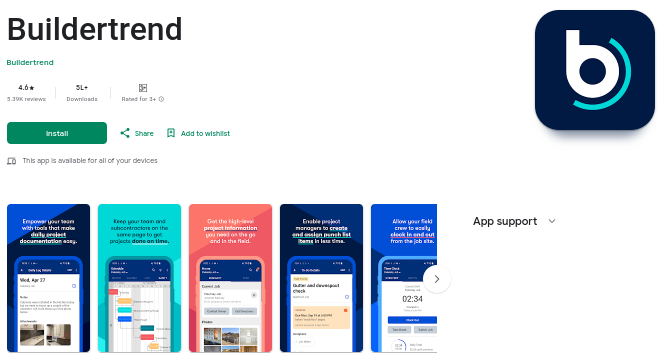
Best for residential construction and remodelers
Buildertrend is a favourite among home builders, renovators, and speciality contractors.
In 2026, client experience matters as much as execution. Buildertrend bridges the gap between builders and clients by offering transparency and real-time updates, reducing misunderstandings and delays.
Ideal for: Home builders, remodelers, and small-to-mid-sized construction businesses.

Best for design-to-build integration
Autodesk Construction Cloud combines project management with design collaboration, making it ideal for projects where architects, engineers, and contractors work closely.
Construction errors and rework can cost up to 5–10% of the total project value. Autodesk’s design-led approach helps identify issues early, saving both time and money.
Ideal for: Design-build firms, engineering teams, and large infrastructure projects.
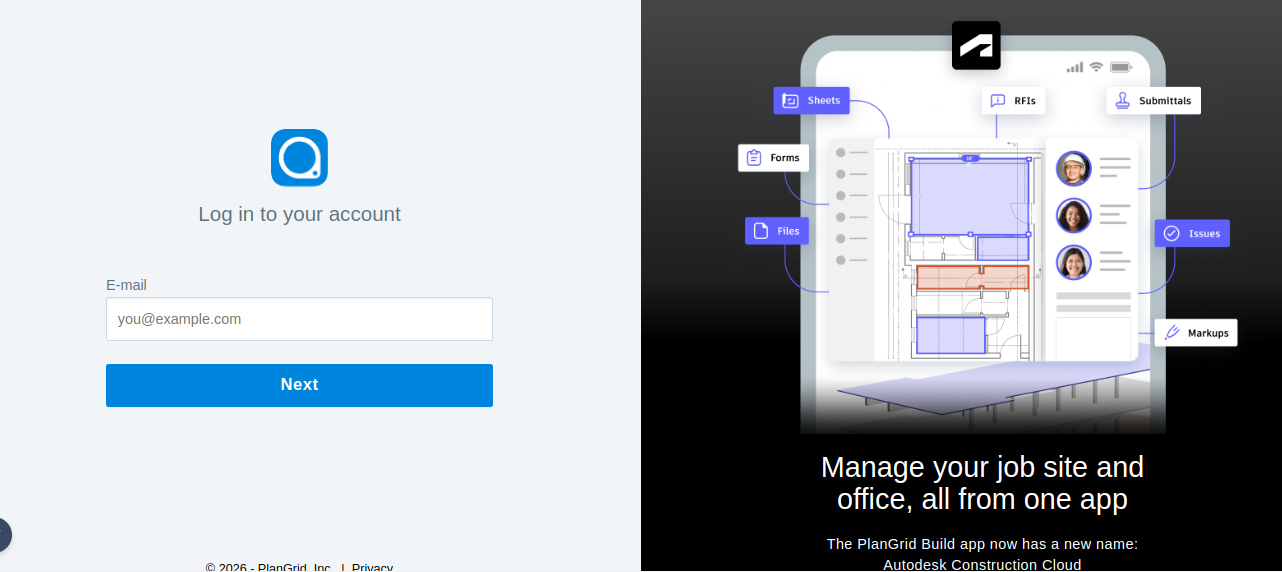
Best for on-site collaboration and drawings
PlanGrid is widely used by on-site teams who need quick access to drawings and documents.
With mobile-first workflows becoming standard, PlanGrid ensures field teams always have the latest plans, reducing costly mistakes caused by outdated drawings.
Ideal for: Site engineers, supervisors, and field teams.
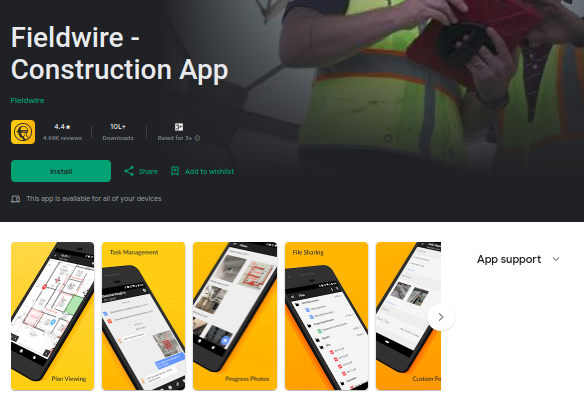
Best for task management and field productivity
Fieldwire focuses on simplifying task coordination between office and site teams.
Fieldwire helps improve productivity by providing clarity on responsibilities. Research indicates that poor communication causes nearly 30% of project delays, which Fieldwire effectively addresses.
Ideal for: Contractors, subcontractors, and field managers.
The construction industry is under pressure to deliver faster, safer, and more cost-effective projects. Modern project management apps help by:
With AI, automation, and predictive analytics becoming more common, future-ready construction apps are no longer optional—they are essential.
Before selecting a platform, consider the following:
Singsys is a trusted software development company with over 15+ years of experience in building scalable, secure, and high-performance mobile and web applications. From custom construction management apps to enterprise-level digital solutions, Singsys helps businesses streamline operations and achieve better project outcomes.
Ready to digitise your construction projects?
Get in touch with Singsys today and build a smarter, more efficient construction management system for 2026 and beyond.
A construction project management app is a digital tool that helps manage planning, scheduling, budgeting, communication, and documentation throughout a construction project lifecycle.
Yes. Many apps like Buildertrend and Fieldwire are designed specifically for small to mid-sized construction businesses.
Most modern apps offer offline access, allowing site teams to work without internet connectivity and sync data later.
Pricing varies depending on features and project size. Costs typically range from monthly subscriptions to enterprise-level licensing.
Yes. Studies show that digital project management tools can reduce delays by improving communication, planning accuracy, and accountability.
Read more blog posts:






May 7th, 2026
If you run an online store—or plan to start one—you already know the truth: everyone is on their phone. In 2026, if your business isn’t on a mobile screen, it’s […]
Apr 30th, 2026
Mobile apps are handling more sensitive data than ever before. From personal details to financial transactions, users trust apps to keep their information safe. That’s why security is no longer […]
Apr 21st, 2026
Pune has earned its place as one of India’s most reliable technology destinations. It is not as chaotic as Mumbai or as expensive as Bangalore. Instead, Pune offers a perfect […]