Software quality is not something that testers have to think about at the end of development anymore. It is something that everyone has to think about all the time when we are working on a product. Companies want to get their products out they want fewer problems with them they want people to like using them and they want the products to work well all the time.
This is where new ways of testing come in like Shift-Left Testing and Shift-Right Testing. These modern testing strategies are really important for making sure software quality is good. Software quality and testing are key, to making sure everything works the way it should.
Understanding Shift-Left and Shift-Right Testing is really important, for companies that want to build digital products.
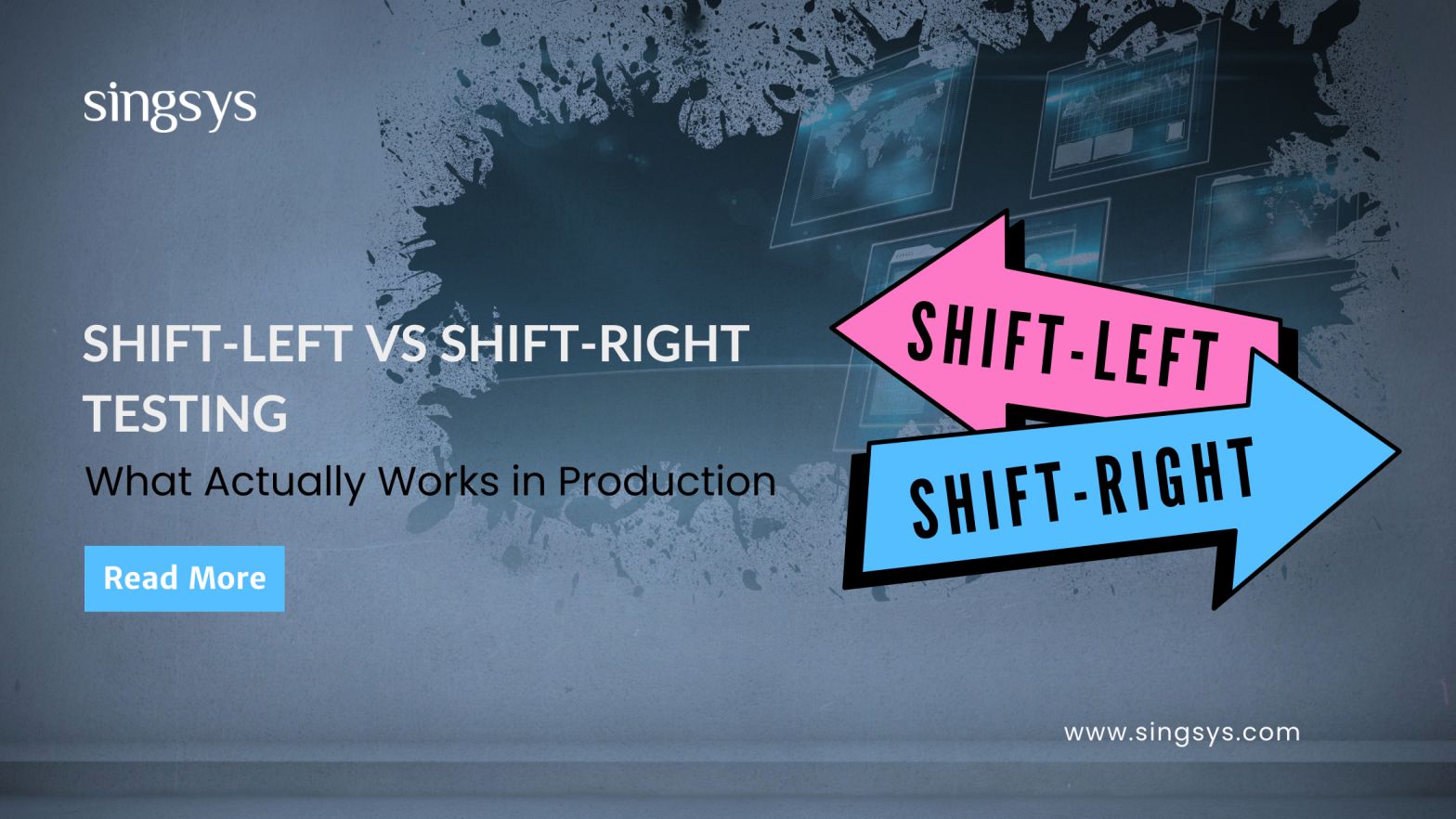
Shift-Left and Shift-Right Testing are two ways that change when and how we do testing in the software development lifecycle.
We used to do testing at the end. Now we do it at every stage from when we first plan something to when we check on it after it is made.
This guide is going to tell us about two concepts. It will explain them in detail. We will learn about the things they can do for us and how they are different from each other. The guide will also show us when to use each concept and how companies can use them together to make a plan, for quality. The concepts are really useful. Businesses can benefit from using them in the right way.
So Shift-Left Testing is when you do the testing part of making software earlier. You do not wait until the software is totally done. You start testing when you are planning, designing and writing the code, for Shift-Left Testing. This way Shift-Left Testing becomes a part of the process from the very beginning.
Key idea:
Test early, fix early, and reduce risk.
Core principles of Shift-Left Testing:
Testing begins when we are gathering the requirements, for a project. This is the time when we start to think about how we will test the project. The requirements gathering phase is a part of the testing process because it helps us to understand what the project is supposed to do. Testing starts during this phase, which is also known as requirements gathering. We need to test the requirements to make sure they are correct and that the project will meet the needs of the users.
Developers work together with testers. They do this closely. The developers and testers really need to collaborate with each other. This is because the developers and testers are working on the thing. The developers and testers must work together to get things done. The developers and testers collaborate closely.
They start using automation from the beginning. The idea of automation is brought in on. This means that automation is introduced in the process and it plays a big role, in how things are done. Automation is used from the start.
Bugs are stopped from happening in the place they are not just found after they have already caused problems. The goal is to prevent bugs so we do not just look for them we make sure they do not occur all. This way bugs are prevented not just detected.
How Shift-Left Testing Works
Testing activities are integrated into:
Requirement analysis
Architecture and design reviews
Code development
Continuous Integration (CI) pipelines
Instead of discovering issues in production, problems are identified before they become expensive.
Benefits of Shift-Left Testing
Early bug detection
We find problems before they become issues. This way the problems do not grow into defects. We catch these issues on which is a good thing, for the software because issues that are found early are easier to fix. This is what happens when we find issues before they grow into defects.
Lower development cost
Fixing bugs early is far cheaper than fixing them after release.
Faster delivery cycles
When we have to do reworks the product gets to the market faster. This is because we do not have to spend a lot of time fixing things. Fewer reworks mean that the time it takes to get something to the market is shorter. We can get the product to the customers quickly when we do reworks.
Better code quality
The developers write code that’s easy to understand and simple to test. This makes the code very clean. The code that the developers write is also testable.
Stronger collaboration
The Quality Assurance team, the developers, the product managers and the DevOps teams all work together. They do this so that the Quality Assurance team and the developers and the product managers and the DevOps teams can make sure everything is okay. The Quality Assurance team and the developers and the product managers and the DevOps teams have to be, on the page.
Despite these challenges, the long-term ROI is very high.
What Is Shift-Right Testing?
Shift-Right Testing is what happens when we test things after they are already there, in the real world where people are actually using them. We look at how people’re using the things we made and use that information to make them better so they work properly and do what they are supposed to do. This helps with the quality, performance and reliability of the things we test like Shift-Right Testing does.
Key idea:
Test in production, learn from users, and improve continuously.
Core principles of Shift-Right Testing:
Monitoring real user behaviour
Continuous feedback loops
Observability and analytics
Performance testing in live environments
Reliability engineering
How Shift-Right Testing Works
Testing continues through:
Production monitoring
Real-time analytics
User behaviour tracking
A/B testing
Chaos engineering
Performance monitoring
Error tracking
This approach ensures systems remain reliable even under real-world pressure.
Benefits of Shift-Right Testing
Real-world quality insights
When you watch people use the product you get to see how real users actually interact with the product. This is what happens when real users interact with the product.
Better performance optimisation
When we look at live performance data it really helps us make things faster and more stable. We can use live performance data to find out what is going wrong and fix it. This way live performance data is very useful, for making things better.
Improved user experience
We make decisions based on the way people actually use things. The decisions are based on usage patterns of the people who use them.
Higher system resilience
Computer systems become more able to keep working when something goes wrong. This means that the systems are better, at dealing with problems and they do not stop working. The systems can still work even if there is a fault. Computer systems become more reliable. They can keep working properly.
Continuous improvement
Things that are made get better because of what people think about them. Our products evolve based on feedback from people who use our products. This helps our products to get better over time because of the real feedback.
Challenges of Shift-Right Testing
Requires strong monitoring tools
Needs mature DevOps culture
Data security concerns
Risk of live failures if poorly managed
Complex analytics implementation
Shift-Left vs Shift-Right Testing: Core Differences
The future of software testing is evolving into continuous quality engineering, where:
Testing is automated
Quality is built-in
Monitoring is continuous
Feedback is real-time
Improvement is constant
Systems are self-healing
AI-driven testing becomes standard
In this future, Shift-Left vs Shift-Right Testing becomes a unified strategy rather than two separate models.
Shift-Left vs Shift-Right Testing is not a competition—it is a collaboration. One prevents defects, the other improves real-world performance. Together, they create robust, scalable, and future-ready digital products.
Organisations that adopt both approaches gain:
Faster delivery
Better quality
Lower risk
Higher customer satisfaction
Stronger system reliability
Long-term scalability
Take Your Action
If your organisation is looking to build high-quality, scalable, and future-ready digital products, you need more than just testing—you need a strategic quality engineering partner.
Singsys helps businesses implement modern testing frameworks, DevOps pipelines, automation strategies, and quality-first development models that integrate both Shift-Left and Shift-Right Testing seamlessly.
Tanu Vishwakarma, a seasoned social media marketer, possesses a passion for promoting businesses online. She specialises in crafting creative strategies to captivate potential customers. Her dedication to staying updated on industry trends ensures that her methods are always effective. Tanu thrives on helping businesses shine in the digital realm.
Managing a school today involves much more than classrooms and textbooks. From student records and attendance to online learning and communication, institutions need smart digital solutions to stay organised and […]
In today’s competitive market, businesses need more than just great products or services to grow. They need stronger customer relationships, faster follow-ups, better team coordination, and a clear view of […]
The oil and gas industry is one of the most data-heavy industries in the world. Every day, companies generate massive amounts of data from drilling operations, seismic surveys, production systems, […]