Choosing the right software is no longer just an IT decision — it is a business decision. Whether you are a startup trying to move fast or an enterprise looking to scale securely, the software you choose can either support your growth or silently slow it down.
One common question many businesses face today is: Should we invest in custom IT solutions or go with off-the-shelf software?
Both options have their strengths and limitations. This guide breaks everything down in a simple, human way so you can confidently decide what works best for your business.
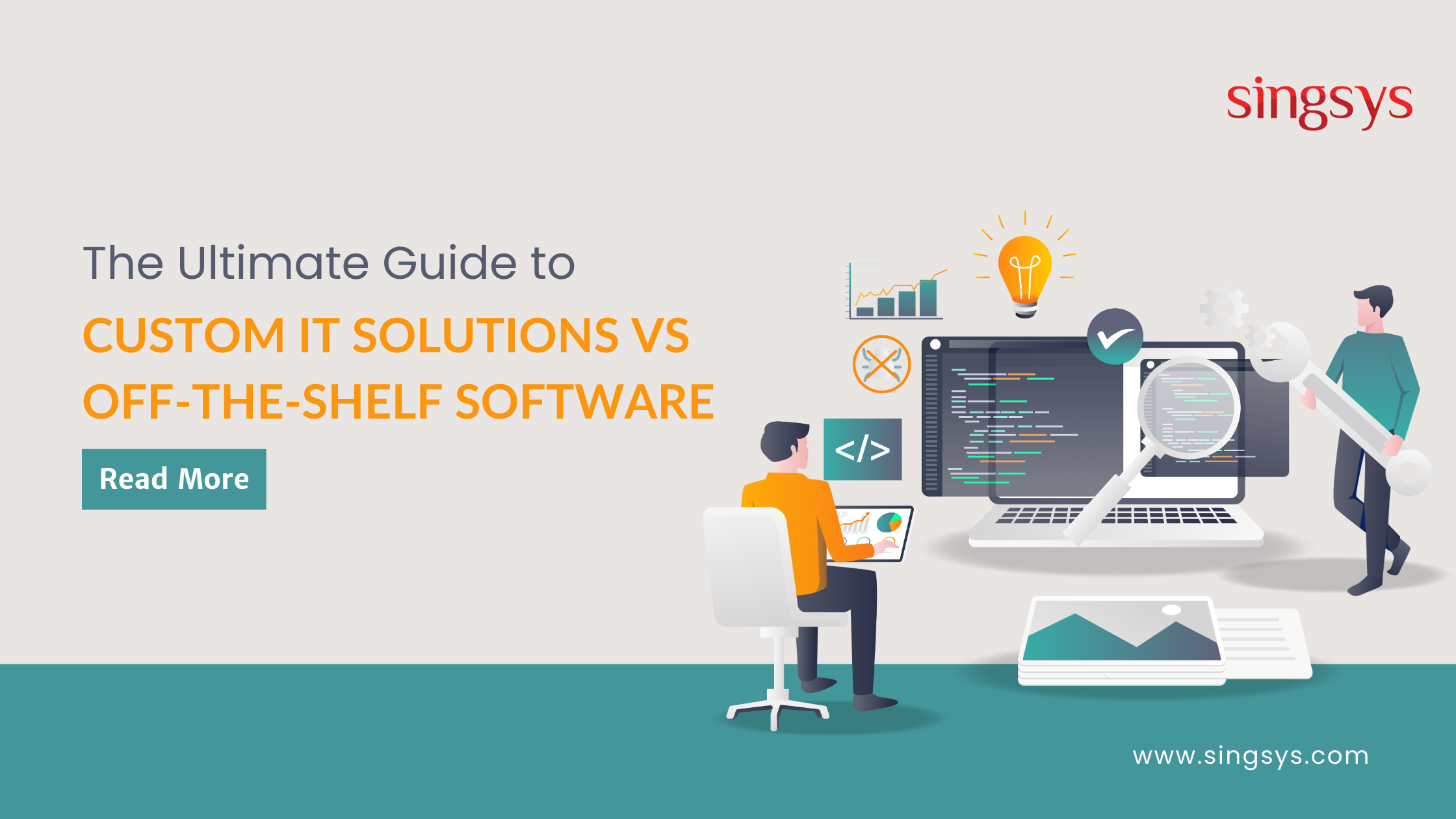
Custom IT solutions are software applications designed and developed specifically for your business. Instead of adjusting your workflow to fit the software, the software is built around how you work.
These solutions work well for standard business needs and are often cost-effective in the short term.
Who typically uses off-the-shelf software?
Startups and small businesses
Teams with simple workflows
Businesses needing quick deployment
Companies with limited initial budgets
Custom IT Solutions vs Off-the-Shelf Software: Key Differences
1. Cost Structure
Off-the-shelf software usually has a lower upfront cost, often through monthly or annual subscriptions. However, over time, licence fees, add-ons, and user-based pricing can add up.
Custom IT solutions require a higher initial investment but often offer better long-term value by eliminating recurring licence costs and reducing inefficiencies.
2. Flexibility and Customisation
Custom software is built exactly how your business operates. Every feature serves a purpose, and changes can be made as your needs evolve.
Off-the-shelf software offers limited customisation. You may end up paying for features you never use or struggling without features you actually need.
3. Scalability
As your business grows, custom IT solutions can scale smoothly. New modules, integrations, and features can be added without disruption.
Off-the-shelf software may struggle to keep up with growth, especially if your operations become more complex or user numbers increase significantly.
4. Integration with Existing Systems
Custom solutions integrate seamlessly with your current tools, databases, and platforms.
Off-the-shelf software may offer integrations, but they are often limited or require additional third-party tools.
5. Security and Data Control
With custom IT solutions, you have full control over data, hosting, and security protocols. This is especially important for industries like healthcare, finance, and enterprise services.
Off-the-shelf software stores data on vendor-controlled servers, which may raise concerns around data privacy and compliance.
Cost Comparison: Short-Term vs Long-Term
At first glance, off-the-shelf software seems cheaper. But over time, businesses often face:
Rising subscription costs
Charges for additional users
Fees for premium features
Vendor lock-in
Custom IT solutions, while initially more expensive, usually provide better ROI in the long run by:
Reducing operational inefficiencies
Supporting business growth
Eliminating unnecessary recurring costs
Maintenance, Support, and Updates
Custom IT solutions come with dedicated maintenance and support. Updates are rolled out based on business needs, not vendor schedules.
With off-the-shelf software, updates are controlled by the vendor. While this can be convenient, it may also introduce unwanted changes or downtime.
Speed to Market: Which Is Faster?
Off-the-shelf software wins when speed is the priority. You can deploy it almost instantly.
Custom software takes time to design, develop, test, and deploy — but the result is a solution that fits your business perfectly and avoids long-term compromises.
Pros and Cons at a Glance
Custom IT Solutions
Pros
Fully tailored to your business
High scalability and flexibility
Better security and control
Long-term cost efficiency
Cons
Higher initial investment
Longer development time
Off-the-Shelf Software
Pros
Quick implementation
Lower upfront cost
Easy to use
Cons
Limited customisation
Ongoing subscription costs
Scalability challenges
Which Option Is Right for Your Business?
Ask yourself:
Are our workflows standard or unique?
Do we expect rapid growth?
Is data security a priority?
Are we thinking short-term or long-term?
Startups often begin with off-the-shelf tools, while growing businesses and enterprises usually move towards custom IT solutions as complexity increases.
In many cases, a hybrid approach works well — using off-the-shelf tools for basic needs and custom solutions for core business operations.
Future Trends in Business Software
The future is moving towards:
AI-driven custom software
Modular and scalable platforms
Industry-specific IT solutions
Greater focus on user experience and automation
Businesses are increasingly choosing solutions that adapt to them, not the other way around.
There is no one-size-fits-all answer. Off-the-shelf software is great for getting started quickly, while custom IT solutions offer long-term flexibility, control, and scalability.
The right choice depends on your goals, budget, and vision for the future.
Take Your Action
If your business has outgrown generic software or you are planning for long-term digital growth, custom IT solutions can give you a real competitive edge.
At Singsys, businesses get tailored software solutions designed around real business needs — from web and mobile applications to enterprise-grade systems that scale securely.
Tanu Vishwakarma, a seasoned social media marketer, possesses a passion for promoting businesses online. She specialises in crafting creative strategies to captivate potential customers. Her dedication to staying updated on industry trends ensures that her methods are always effective. Tanu thrives on helping businesses shine in the digital realm.
Singapore has built a strong reputation as a technology and healthcare hub in Asia. From telemedicine and patient engagement platforms to hospital management systems, AI-powered healthcare solutions and digital health […]
The solar energy industry is growing rapidly as businesses, homeowners and organisations increasingly invest in renewable energy. But while solar technology continues to evolve, many solar companies still rely on […]
In today’s competitive digital landscape, users expect mobile applications to perform flawlessly across multiple devices and operating systems. Whether an app is built using React Native, Flutter, Xamarin, or another […]