As Singsys Software Services marks its 15th anniversary milestone this month, we reflect on a remarkable journey of growth, innovation, and client satisfaction. Founded in January 2009, Singsys has evolved from a vision to a multinational IT company, leaving an indelible mark in the world of Mobile and Web Application Development.
The foundation of Singsys was laid by Sri Narayan Shukla, an entrepreneur with a remarkable story of perseverance and determination. Starting his professional journey at the tender age of 17, Sri Narayan Shukla initially discontinued his education but later resumed it alongside work, acquiring qualifications in Electronics, AMIETE (Equivalent to B.Tech.), and an MBA.
(more…)Dec 27th, 2023
Software testing is critical for the software development life cycle (SDLC) to evaluate software applications’ quality, functionality, and reliability. It is a meticulous process that aims to identify defects, errors, or discrepancies between expected and actual results, ensuring that the software meets the specified requirements. This comprehensive evaluation of software applications is significant to deliver a reliable and high-quality product to end-users. Let’s delve deeper into the various aspects of software testing.
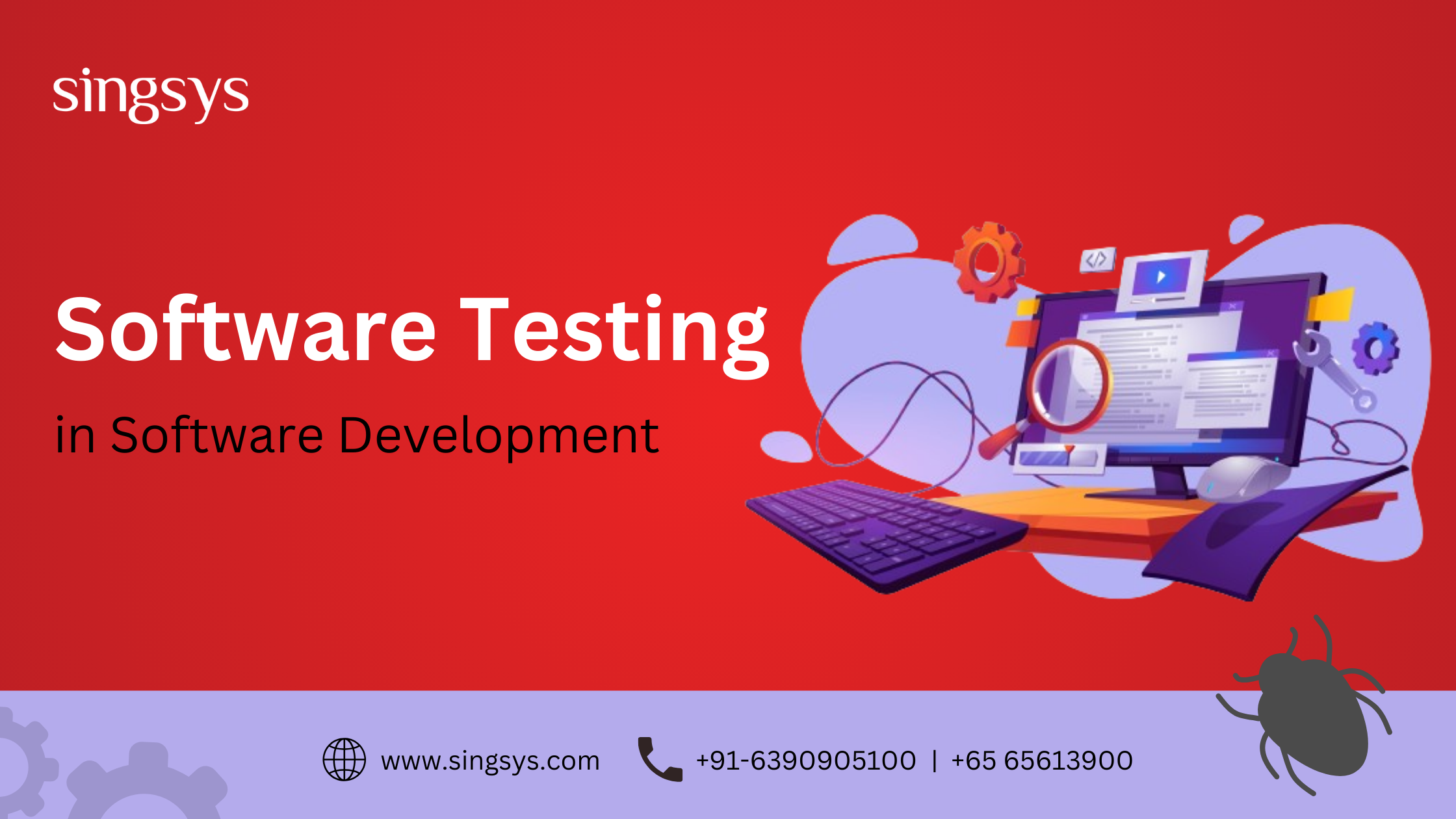
Software testing is not merely about finding bugs or faults. It encompasses verifying if the software meets both technical and user requirements effectively. It involves validating whether the software is bug-free, adheres to its design and development specifications, and caters to user needs efficiently by handling diverse scenarios, including exceptional cases and boundary conditions.
(more…)Dec 12th, 2023
Google continues to push boundaries with its latest innovation – Google Gemini. Representing a groundbreaking advancement, Gemini isn’t just another AI model; it’s a multifaceted, multimodal entity designed to revolutionise how we approach coding and comprehend diverse forms of data.
At its core, Google Gemini represents an AI model capable of comprehending, explaining, and generating high-quality code across the world’s most prevalent programming languages. From Python to Java, C++, and Go, Gemini goes beyond language barriers, leveraging its profound ability to navigate complexity, making it a leading foundation model for coding worldwide.
(more…)Dec 5th, 2023
Java, a popular programming language, offers a rich set of data structures through its Collection Framework. Among these, ArrayList and HashMap are fundamental classes that serve distinct purposes and possess unique functionalities. Let’s explore these two classes, highlighting their similarities, differences, and use cases.
ArrayList, residing in the java.util package provides dynamic arrays in Java programming. Despite being potentially slower than standard arrays, it proves invaluable in scenarios demanding frequent array manipulations. It implements the List interface, enabling operations such as addition, retrieval, and removal of elements.
(more…)In today’s software development landscape, data validation is critical in ensuring data quality, accuracy, and consistency within applications. Yet, robust data validation can be daunting, particularly when handling intricate, diverse, or evolving data sources. This challenge and optimising data validation frameworks for scalability and adaptability require various strategies and best practices.
Implementing abstraction and modularization is pivotal for scalable frameworks. Abstraction conceals implementation complexities, while modularization dissects validation logic into reusable, comprehensive components. This approach simplifies code, fosters easy testing and debugging, and facilitates customisation, enabling diverse validation rules for distinct data contexts.
(more…)