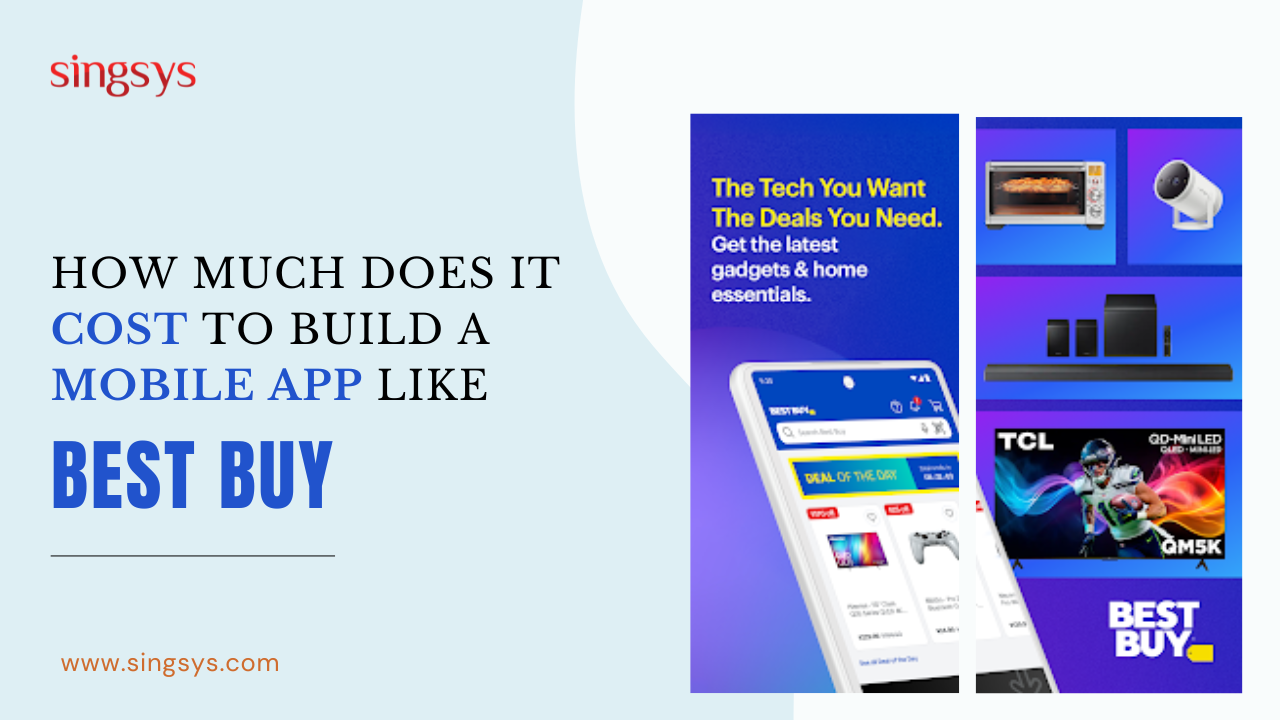
Mobile apps play a vital role in how retail businesses connect with customers. Leading retailers like Best Buy have successfully built powerful mobile applications that allow users to browse products, compare prices, read reviews, and make purchases from anywhere.
For businesses planning to enter the eCommerce space, one of the most common questions is: How much does it cost to build a mobile app like Best Buy?
The answer depends on several factors such as features, design complexity, development team location, and the technologies used. In this blog, we will explore the cost of developing a retail mobile app, the features required, and what businesses should consider before starting development.
Before estimating the cost, it is important to understand how the Best Buy app works. The application is essentially a full-featured eCommerce mobile platform designed to provide a seamless shopping experience.
A typical retail mobile app like Best Buy includes:
Product browsing and categories
Advanced search and filters
Secure checkout and payment integration
Product reviews and ratings
Order tracking
Customer accounts and loyalty programs
Push notifications for deals and promotions
These features combine to create a convenient shopping experience that increases customer engagement and boosts sales.
Key Features Required to Build an App Like Best Buy
The overall mobile app development cost depends largely on the features included. Let’s break down the essential features required to build a Best Buy-like eCommerce app.
1. User Registration and Profiles
Users should be able to create accounts quickly using email, phone numbers, or social media logins.
This feature allows customers to:
Save their addresses
Track orders
Manage payment methods
Receive personalised offers
Adding secure authentication systems increases both usability and security.
Businesses often choose offshore development teams to reduce costs while maintaining quality.
How Long Does It Take to Build a Retail App?
The development timeline depends on the complexity of the project.
Typical timelines include:
Basic app: 3 – 4 months
Medium app: 4 – 6 months
Advanced app: 6 – 10 months
This includes planning, design, development, testing, and deployment.
Benefits of Building an App Like Best Buy
Investing in a retail mobile application offers several advantages.
Better Customer Engagement
Mobile apps create a direct communication channel with customers.
Higher Conversion Rates
Apps usually have higher conversion rates than websites because they provide faster navigation and personalised experiences.
Strong Brand Loyalty
Features like loyalty rewards and personalised recommendations increase customer retention.
Increased Sales
Retail apps encourage impulse purchases through push notifications and promotions.
Conclusion
Ready to build a powerful retail mobile app like Best Buy? Singsys can help turn your idea into a high-performing digital solution. With years of experience in mobile app development, eCommerce solutions, and scalable software platforms, the expert team at Singsys works closely with businesses to design and develop feature-rich applications tailored to their goals.
Whether you are a startup planning your first retail app or an established business looking to expand your digital presence, Singsys offers end-to-end services—from strategy and UI/UX design to development, testing, and ongoing support.
Get in touch with Singsys today to discuss your project and take the first step towards building a successful mobile app for your business.
FAQs
1. How much does it cost to develop an app like Best Buy?
The cost typically ranges between $50,000 and $250,000, depending on features, platform, and development complexity.
2. How long does it take to build an eCommerce mobile app?
A standard eCommerce app can take 4 to 10 months to develop, depending on the feature set and design requirements.
3. What are the most important features of a retail mobile app?
Essential features include product search, user accounts, shopping cart, secure checkout, order tracking, and push notifications.
4. Should businesses build Android and iOS apps separately?
It depends on the budget and target audience. Many companies choose cross-platform development to reduce costs while reaching both platforms.
Tanu Vishwakarma, a seasoned social media marketer, possesses a passion for promoting businesses online. She specialises in crafting creative strategies to captivate potential customers. Her dedication to staying updated on industry trends ensures that her methods are always effective. Tanu thrives on helping businesses shine in the digital realm.
The food industry is evolving faster than ever. With rising digital adoption, on-demand culture, and shifting consumer behaviour, the cloud kitchen business model is becoming a dominant force in 2026. […]
Startups live in a fast-moving environment where speed, efficiency, and scalability define success. One of the biggest decisions they face is choosing the right technology for mobile app development. Traditionally, […]
The healthcare industry is rapidly moving towards digital-first solutions. From booking doctor consultations to ordering medicines online, users now expect healthcare services to be fast, secure, and accessible from their […]