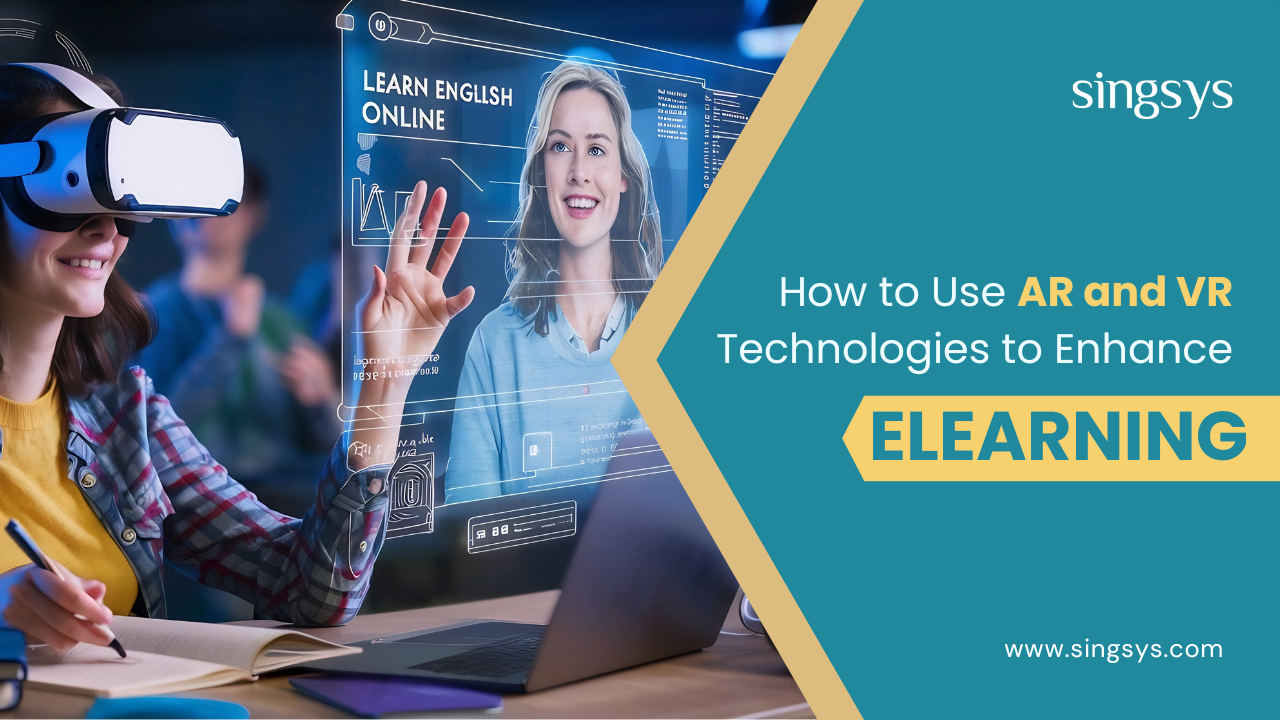
The eLearning landscape is evolving rapidly, driven by the need for more engaging, interactive, and effective learning experiences. Traditional online learning methods, while useful, often lack immersion and real-world application. This is where AR VR for eLearning is transforming the way students learn and interact with digital content.
Augmented Reality (AR) and Virtual Reality (VR) technologies are helping educational institutions and businesses create highly engaging learning environments. When combined with tools like Learning Management System platforms and School Management Systems, these technologies can significantly improve learning outcomes.
Before exploring their benefits, it’s important to understand what AR and VR mean in the context of digital education.
Augmented Reality (AR): Enhances the real-world environment by overlaying digital elements such as images, animations, or data.
Virtual Reality (VR): Creates a fully immersive digital environment where users can interact with virtual objects and scenarios.
Both technologies are powerful tools for making eLearning more interactive, practical, and engaging.
Why AR VR for eLearning Is Gaining Popularity
The demand for AR VR for eLearning is increasing because learners today expect more than just text and videos. They want experiences that are interactive, realistic, and easy to understand.
Key reasons for its growing adoption include:
Better knowledge retention through immersive experiences
Hands-on learning without physical risks
Increased student engagement and motivation
Improved understanding of complex topics
When integrated with a Learning Management system, AR and VR can deliver structured and trackable learning experiences.
Key Benefits of AR and VR in eLearning
1. Enhanced Learning Engagement
One of the biggest advantages of AR and VR is their ability to capture attention. Unlike traditional content, immersive experiences keep learners actively involved.
For example, instead of reading about a scientific concept, students can explore it in a 3D virtual environment. This makes learning more exciting and memorable.
2. Improved Knowledge Retention
Studies show that people remember more when they experience something rather than just read or watch it. AR and VR provide experiential learning, which leads to better retention.
When learners interact with virtual scenarios, they understand concepts more deeply and recall them more effectively.
3. Practical and Real-World Training
VR allows learners to practise real-life situations in a safe environment. This is especially useful for industries like healthcare, engineering, and aviation.
With AR VR for eLearning, students can:
Perform virtual experiments
Practise technical skills
Simulate real-world challenges
This reduces the risk and cost associated with physical training.
4. Personalised Learning Experiences
Every learner has a different pace and style. AR and VR technologies can be customised to suit individual learning needs.
When combined with a Learning Management system, educators can track progress and adjust content accordingly. This creates a more personalised and effective learning journey.
5. Better Collaboration and Interaction
Virtual environments allow learners to interact with each other and instructors in real time. This improves collaboration, even in remote learning setups.
Students can join virtual classrooms, participate in group activities, and solve problems together, making learning more social and engaging.
How to Use AR and VR Technologies in eLearning
1. Integrate AR/VR with Learning Management Systems
A Learning Management system acts as the backbone of eLearning. Integrating AR and VR into LMS platforms ensures structured delivery of immersive content.
This allows educators to:
Assign AR/VR-based modules
Track learner progress
Assess performance using data analytics
It also ensures that immersive learning aligns with curriculum goals.
2. Use AR for Interactive Content
AR can be used to enhance textbooks, presentations, and study materials. By scanning a page or object, learners can access additional digital content such as 3D models or videos.
Examples include:
Interactive diagrams for science subjects
AR-based flashcards for language learning
Visual overlays for complex concepts
This makes learning more dynamic and engaging.
3. Implement VR for Simulation-Based Training
VR is ideal for creating realistic training simulations. It allows learners to practise skills in a controlled virtual environment.
Use cases include:
Medical training simulations
Virtual lab experiments
Safety training for industrial workers
These simulations provide hands-on experience without real-world risks.
4. Enhance School Management Systems with AR/VR
School Management Systems can also benefit from AR and VR integration. These systems manage student data, attendance, schedules, and communication.
By integrating AR/VR features, schools can:
Offer virtual campus tours
Conduct immersive classroom sessions
Improve communication between students and teachers
This creates a more modern and efficient educational ecosystem.
5. Gamify Learning with AR and VR
Gamification is a powerful way to increase learner engagement. AR and VR technologies can turn lessons into interactive games.
Gamified learning can include:
Rewards and achievements
Interactive challenges
Virtual competitions
This approach motivates learners and makes education more enjoyable.
Challenges of Using AR and VR in eLearning
While AR and VR offer many benefits, there are some challenges to consider:
1. High Initial Cost
Developing AR/VR content and purchasing equipment can be expensive. However, costs are decreasing as technology becomes more accessible.
2. Technical Requirements
AR and VR applications require strong hardware and internet connectivity. Institutions need to ensure they have the right infrastructure.
3. Content Development Complexity
Creating high-quality immersive content requires expertise and time. Businesses may need to work with experienced development partners.
Despite these challenges, the long-term benefits of AR VR for eLearning often outweigh the initial investment.
Future of AR VR for eLearning
The future of AR VR for eLearning looks promising. As technology continues to evolve, we can expect:
More affordable AR/VR devices
Advanced AI integration for personalised learning
Wider adoption in schools and corporate training
Better integration with Learning Management system platforms
Educational institutions and businesses that adopt these technologies early will have a competitive advantage.
Best Practices for Implementing AR and VR in eLearning
To get the most out of AR and VR technologies, follow these best practices:
Start with clear learning objectives
Choose the right technology based on use case
Ensure compatibility with your Learning Management system
Focus on user-friendly design
Continuously measure and improve performance
A well-planned strategy ensures successful implementation and better learning outcomes.
Conclusion
AR and VR technologies are reshaping the future of digital education. By offering immersive, interactive, and practical learning experiences, they address the limitations of traditional eLearning methods.
When integrated with tools like Learning Management system platforms and School Management Systems, AR and VR can create a powerful and effective learning environment. From improved engagement to better knowledge retention, the benefits are clear.
Businesses and educational institutions that embrace AR VR for eLearning can deliver more impactful and future-ready education.
Tanu Vishwakarma, a seasoned social media marketer, possesses a passion for promoting businesses online. She specialises in crafting creative strategies to captivate potential customers. Her dedication to staying updated on industry trends ensures that her methods are always effective. Tanu thrives on helping businesses shine in the digital realm.
Augmented Reality (AR) has rapidly evolved from being a futuristic concept to a mainstream technology that transforms how users interact with mobile apps. From gaming and e-commerce to healthcare and […]
Artificial Intelligence (AI) is now more than just a trendy term; it is key to driving innovation, efficiency, and profit in many industries. By 2026, AI will change how businesses […]
Customer engagement has become the heartbeat of business success in today’s hyper-competitive market. Customers no longer stick to a brand just for its products; they stay loyal because of meaningful […]