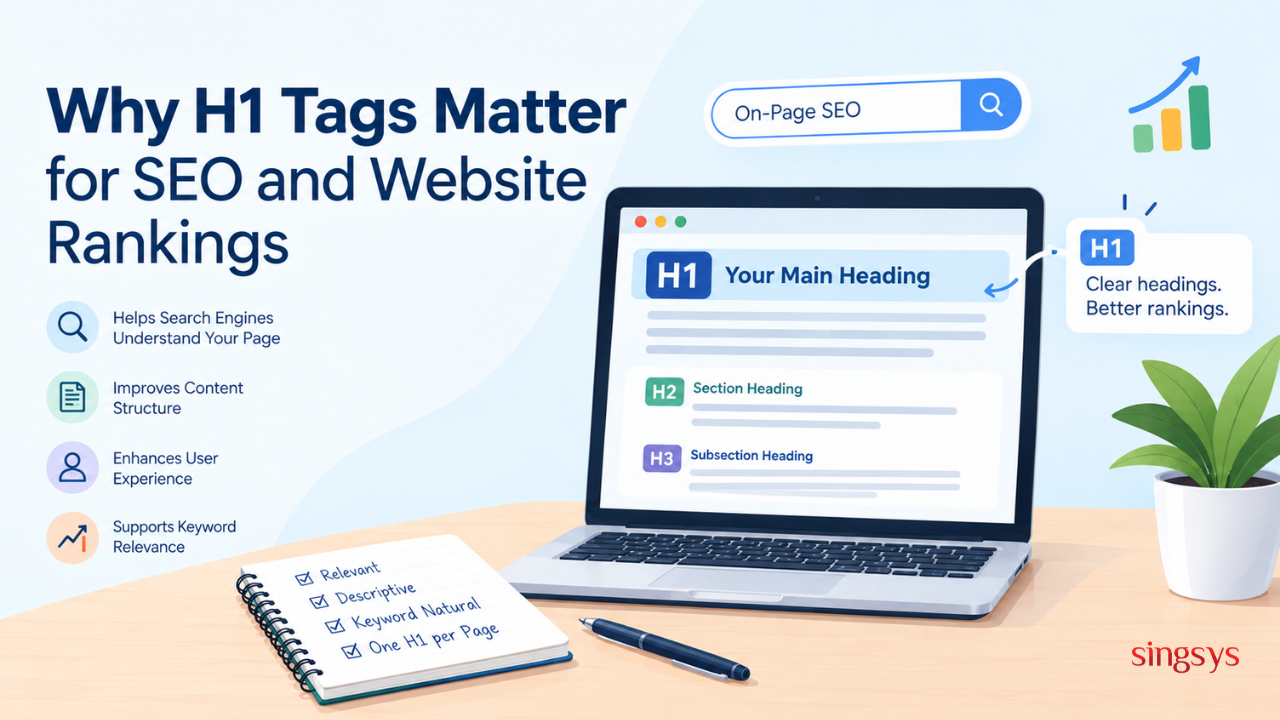
When optimising a website for search engines, many businesses focus on keywords, backlinks, page speed and meta descriptions. But there is another simple element that deserves attention: the H1 tag.
An H1 tag is the main heading of a webpage. It tells visitors what the page is about and helps search engines understand the primary topic of the content. While an H1 tag alone will not take a page to the top of Google, using it properly is an important part of a well-structured on-page SEO strategy.
In the world of search engine optimisation (SEO), ensuring proper indexing and ranking of web pages is important. One challenge that website owners often face is managing alternative pages serving similar content.
In such cases, applying the canonical tag becomes important to signal to search engines which version of the page should be preferred for indexing and ranking.
On-page SEO consists of various elements of SEO that play a key role in optimizing specific website pages so that it ranks higher and get more traffic through the search engine. It refers to SEO activities need to be done on your website so that page will rank high in search engine which includes elements like page titles, internal linking, meta tags and descriptions, etc.