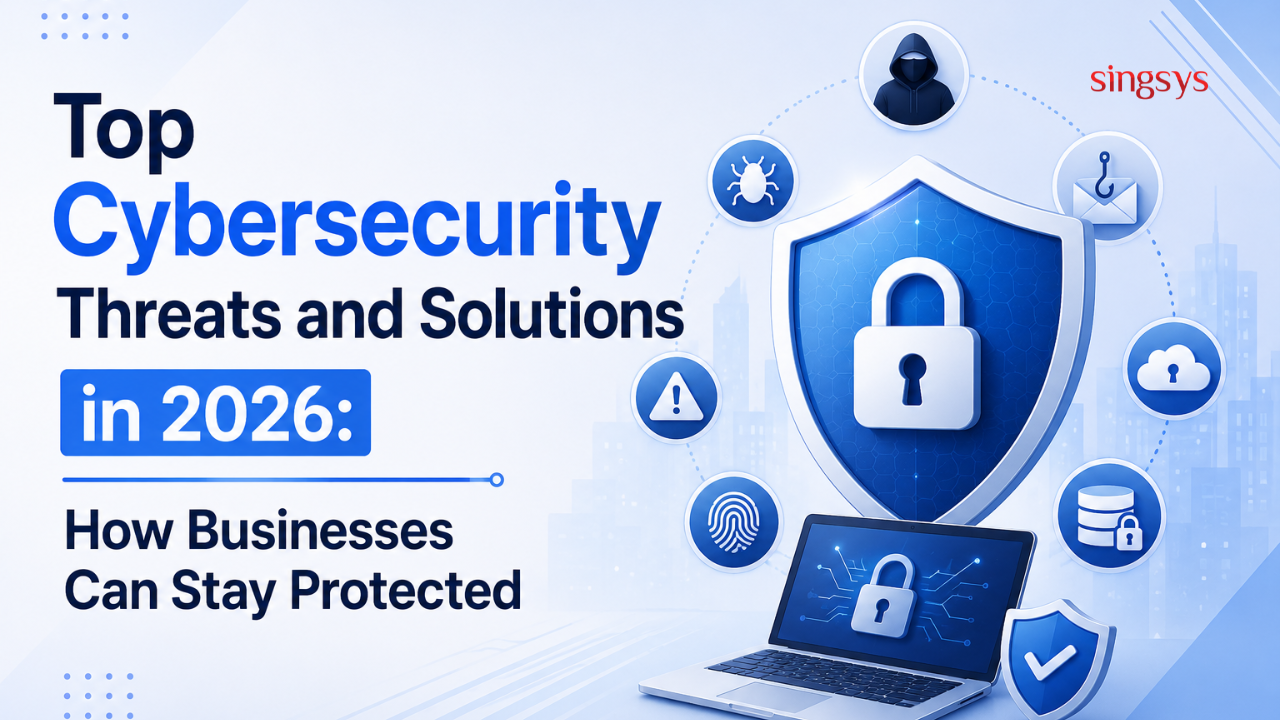
Cybersecurity is no longer just an IT concern—it’s a business necessity. As organisations continue to embrace artificial intelligence (AI), cloud computing, remote work, and connected devices, cybercriminals are becoming more sophisticated than ever. In 2026, cyberattacks are not only more frequent but also more targeted, automated, and financially damaging.
Whether you’re a startup, an enterprise, or an eCommerce business, understanding the latest cybersecurity threats is essential to protecting your data, customers, and reputation.
In this comprehensive guide, we’ll explore the biggest cybersecurity threats businesses face in 2026, practical solutions to mitigate them, and best practices for building a stronger security posture.
Digital transformation has accelerated across every industry. Businesses rely on cloud platforms, mobile applications, AI-powered tools, APIs, and IoT devices to streamline operations and improve customer experiences. While these technologies offer significant benefits, they also expand the attack surface for cybercriminals.
The consequences of a successful cyberattack can include:
Financial losses
Operational downtime
Customer data breaches
Regulatory penalties
Intellectual property theft
Reputational damage
Loss of customer trust
Modern cybersecurity is about prevention, detection, and rapid response—not just installing antivirus software.
The Evolving Cybersecurity Landscape in 2026
Cybercriminals are increasingly using AI, automation, and social engineering to bypass traditional security measures. Instead of targeting only large corporations, attackers now focus on businesses of all sizes because smaller organisations often have weaker security controls.
Some of the key trends shaping cybersecurity include:
AI-powered cyberattacks
Cloud-native security challenges
Supply chain vulnerabilities
Increased ransomware sophistication
Identity-based attacks
API security risks
Insider threats
Internet of Things (IoT) vulnerabilities
Let’s explore these threats in detail.
Top Cybersecurity Threats in 2026
1. AI-Powered Cyberattacks
Artificial intelligence has become a double-edged sword. While businesses use AI to improve productivity and security, cybercriminals are also leveraging AI to automate attacks and identify vulnerabilities more quickly.
How AI Is Being Used by Attackers
Automated phishing campaigns
Password cracking
Malware generation
Deepfake voice and video attacks
Intelligent reconnaissance
Automated vulnerability scanning
AI enables attackers to launch faster, smarter, and more convincing cyberattacks than ever before.
Solution
Businesses should adopt AI-powered cybersecurity tools capable of detecting unusual behaviour, identifying anomalies, and responding to threats in real time.
2. Advanced Ransomware Attacks
Ransomware continues to be one of the most damaging cyber threats in 2026.
Today’s ransomware attacks often involve:
Data encryption
Data theft
Double extortion
Triple extortion
Public data leaks
Supply chain attacks
Attackers no longer simply lock files—they steal sensitive data before encrypting systems, increasing pressure on organisations to pay.
Solution
Implement:
Regular offline backups
Endpoint Detection and Response (EDR)
Multi-Factor Authentication (MFA)
Network segmentation
Continuous monitoring
Never rely solely on backups; proactive prevention is essential.
3. Phishing and Social Engineering
Phishing attacks have become remarkably convincing thanks to AI-generated emails, fake websites, and personalised messaging.
Common Types
Email Phishing
Fake emails designed to steal login credentials.
Spear Phishing
Highly targeted attacks aimed at specific individuals.
Business Email Compromise (BEC)
Attackers impersonate executives or vendors to trick employees into transferring money or sharing sensitive information.
Deepfake Phishing
AI-generated voice or video messages that mimic trusted individuals.
Solution
Employee cybersecurity awareness training
Email filtering
AI-powered threat detection
Multi-factor authentication
Verification procedures for financial requests
4. Cloud Security Misconfigurations
Cloud adoption continues to grow, but improperly configured cloud environments remain one of the leading causes of data breaches.
Common Mistakes
Publicly accessible storage buckets
Weak access controls
Poor identity management
Unencrypted data
Excessive permissions
Solution
Implement:
Zero Trust security
Cloud Security Posture Management (CSPM)
Least privilege access
Encryption for data at rest and in transit
Continuous cloud monitoring
5. API Security Vulnerabilities
Modern applications depend heavily on APIs for communication between systems.
Poorly secured APIs can expose:
Customer information
Payment data
Authentication tokens
Business logic
Solution
Protect APIs through:
OAuth authentication
API gateways
Rate limiting
Input validation
API monitoring
Regular penetration testing
6. Insider Threats
Not every cyber threat comes from outside the organisation.
Employees, contractors, and third-party vendors may unintentionally—or deliberately—compromise company security.
Examples
Accidental data leaks
Privilege misuse
Stolen credentials
Disgruntled employees
Solution
Role-based access control (RBAC)
User activity monitoring
Employee training
Data Loss Prevention (DLP)
Regular access reviews
7. Internet of Things (IoT) Attacks
Businesses increasingly rely on connected devices, including:
Smart sensors
Medical devices
Manufacturing equipment
Security cameras
Smart office systems
Each connected device can become a potential entry point for attackers.
Solution
Change default passwords
Keep firmware updated
Isolate IoT devices on separate networks
Monitor device activity
Disable unused services
8. Supply Chain Attacks
Cybercriminals often target software vendors or service providers to gain access to multiple businesses simultaneously.
Instead of attacking one company directly, they compromise trusted third-party suppliers.
Solution
Businesses should:
Assess vendor security practices
Monitor third-party access
Use Software Bill of Materials (SBOM)
Continuously evaluate supplier risks
9. Zero-Day Exploits
Zero-day vulnerabilities are security flaws discovered before developers release a patch.
Attackers exploit these vulnerabilities before organisations have time to protect themselves.
Solution
Continuous vulnerability scanning
Threat intelligence
Virtual patching
Regular software updates
Endpoint protection
10. Credential Theft
Weak passwords remain one of the easiest ways for attackers to compromise systems.
Common techniques include:
Password spraying
Credential stuffing
Keylogging
Brute-force attacks
Solution
Password managers
Multi-factor authentication
Passwordless authentication
Behavioural authentication
Regular credential monitoring
Emerging Cybersecurity Technologies in 2026
Technology is evolving rapidly to combat sophisticated threats.
AI-Powered Threat Detection
Machine learning helps detect suspicious activity before attacks escalate.
Extended Detection and Response (XDR)
XDR combines endpoint, network, cloud, and identity security into one platform for comprehensive threat visibility.
Zero Trust Architecture
Zero Trust follows the principle of “Never Trust, Always Verify.”
Every user, device, and application must be continuously authenticated and authorised.
Behavioural Analytics
Instead of relying solely on signatures, behavioural analytics identifies unusual activities that may indicate an attack.
Best Practices for Strengthening Your Cybersecurity Strategy
Conduct Regular Security Audits
Routine assessments help identify vulnerabilities before attackers do.
Keep Software Updated
Outdated software is one of the most common entry points for cyberattacks.
Encrypt Sensitive Data
Encryption protects information even if attackers gain access.
Implement Multi-Factor Authentication
MFA significantly reduces the risk of unauthorised access.
Train Employees
Human error remains one of the leading causes of security incidents. Regular cybersecurity awareness training is essential.
Backup Critical Data
Maintain secure, offline, and regularly tested backups.
Monitor Your Network Continuously
Real-time monitoring enables faster threat detection and incident response.
The Role of AI in Modern Cybersecurity
Artificial intelligence is transforming cybersecurity by enabling faster threat detection, predictive analytics, automated incident response, and improved fraud prevention.
AI can:
Detect suspicious behaviour
Identify malware patterns
Predict attack trends
Automate threat response
Reduce false positives
However, businesses must remember that AI complements human expertise—it does not replace it.
Why Cybersecurity Should Be a Business Priority
Cybersecurity is no longer just about protecting computers—it’s about safeguarding business continuity, customer trust, and long-term growth.
A strong cybersecurity strategy helps businesses:
Protect customer data
Ensure regulatory compliance
Minimise financial losses
Maintain operational continuity
Preserve brand reputation
Build customer confidence
Investing in cybersecurity today is far less costly than recovering from a major data breach tomorrow.
Conclusion
As cyber threats continue to evolve in 2026, businesses must adopt a proactive and layered approach to security. From AI-powered attacks and ransomware to cloud vulnerabilities and insider threats, the risks are more sophisticated than ever—but so are the tools and strategies available to combat them.
Cybersecurity should not be viewed as a one-time investment but as an ongoing process of assessment, improvement, and vigilance. By implementing modern security technologies, educating employees, adopting Zero Trust principles, and regularly monitoring your digital infrastructure, your organisation can significantly reduce cyber risks.
Whether you’re running a small business, a growing enterprise, or a global organisation, staying informed about emerging cybersecurity threats is the first step towards building a resilient and secure digital future.
Tanu Vishwakarma, a seasoned social media marketer, possesses a passion for promoting businesses online. She specialises in crafting creative strategies to captivate potential customers. Her dedication to staying updated on industry trends ensures that her methods are always effective. Tanu thrives on helping businesses shine in the digital realm.
When an app has only a few users, database performance may not seem like a major concern. Queries return quickly, pages load smoothly, and everything appears to work as expected. […]
Cloud migration has become a major step for businesses looking to improve flexibility, scalability, and operational efficiency. From startups to large enterprises, companies are moving their applications, databases, and business […]
From small businesses to global enterprises, organisations of all sizes are facing increasing risks such as data breaches, ransomware attacks, phishing scams, and system outages. This is where Cyber Security […]