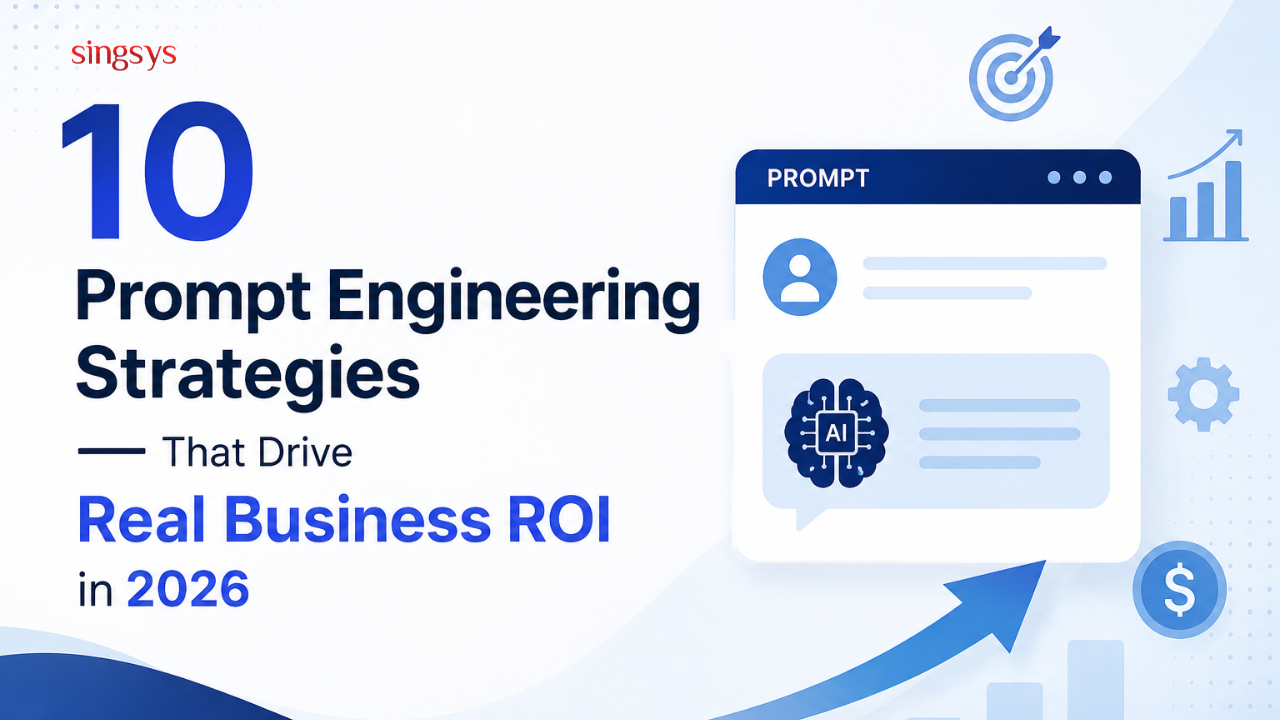
Artificial Intelligence has evolved from a futuristic concept into a powerful business tool. In 2026, organisations across industries are leveraging AI to automate workflows, enhance customer experiences, improve decision-making, and increase productivity. However, the quality of AI-generated outputs largely depends on one critical factor: prompt engineering.
Prompt engineering is the practice of designing effective instructions that guide AI models to produce accurate, relevant, and valuable responses. As businesses invest more in AI-powered solutions, mastering prompt engineering has become essential for achieving measurable returns on investment (ROI).
Here are 10 prompt engineering strategies that are helping businesses maximise the value of AI in 2026.
1. Define Clear Objectives Before Creating Prompts
Many AI projects fail because businesses focus on the technology rather than the outcome. Before writing any prompt, clearly identify the desired result.
For example, instead of asking:
“Write about our software.”
A better prompt would be:
“Create a 500-word blog post highlighting how our project management software helps remote teams improve productivity by 30%.”
Specific objectives help AI deliver more focused and useful responses, reducing editing time and improving efficiency.
2. Provide Context-Rich Instructions
AI performs significantly better when given detailed context.
Include information such as:
Target audience
Industry
Brand tone
Business goals
Desired output format
For example:
“Act as a SaaS marketing expert. Write a LinkedIn post targeting startup founders interested in workflow automation. Use a professional yet conversational tone.”
Providing context helps generate outputs that align closely with business requirements.
3. Use Role-Based Prompting
One of the most effective prompt engineering techniques is assigning a role to the AI.
As AI adoption continues to accelerate, the gap between organisations that understand prompt engineering and those that do not will become increasingly significant.
Prompt engineering is no longer just a technical skill—it is a business strategy. In 2026, organisations that invest in structured prompting frameworks, continuous optimisation, and AI governance are achieving stronger business outcomes and higher returns from their AI investments.
The future of AI success is not simply about having access to advanced models. It is about knowing how to communicate with them effectively. By implementing these ten prompt engineering strategies, businesses can transform AI from a useful tool into a powerful driver of growth, innovation, and measurable ROI.
Need AI Solutions for Your Business?
Whether you’re planning to implement Generative AI, build AI-powered applications, automate business processes, or enhance customer experiences, Singsys has the expertise to help. Our team delivers innovative AI solutions designed to increase productivity, improve decision-making, and generate measurable business ROI.
Tanu Vishwakarma, a seasoned social media marketer, possesses a passion for promoting businesses online. She specialises in crafting creative strategies to captivate potential customers. Her dedication to staying updated on industry trends ensures that her methods are always effective. Tanu thrives on helping businesses shine in the digital realm.
Technology continues to evolve rapidly, transforming industries, businesses, and everyday life. From artificial intelligence to advanced cybersecurity, the coming years will bring innovations that reshape how organisations operate and how […]
Artificial intelligence has steadily moved from being a personal productivity assistant to becoming a powerful team collaborator. OpenAI’s latest feature—Group Chats in ChatGPT—marks one of the biggest steps yet toward […]
For years, creating digital content was all about one thing: pleasing search engines. If you ranked on Google, you won. Everything else—social shares, referrals, even conversions—usually flowed from that visibility. […]