Mobile applications have become an essential investment for businesses in Singapore looking to improve customer engagement, streamline operations, and expand their digital presence. From startups launching their first product to established enterprises modernising their services, understanding the cost of mobile app development is an important part of planning a successful project.
But how much does it actually cost to develop a mobile app in Singapore in 2027?
The answer depends on several factors, including app complexity, features, UI/UX design, platform selection, backend infrastructure, integrations, and the development team’s expertise. Understanding these costs can help businesses set realistic budgets, prioritise essential features, and choose a suitable development partner.
Estimated Mobile App Development Costs in Singapore for 2027
Based on published Singapore agency pricing and market estimates, businesses can use the following indicative ranges to plan their 2027 budgets. Actual quotations will depend on project scope, team, and delivery requirements.
1. Startup / MVP
Estimated Cost: SGD 8,000–30,000
Suitable for startups validating an app concept with essential features, simple navigation, basic user accounts, and limited backend functionality.
Typical Timeline: 6–12 weeks
2. Mid-Level Business App
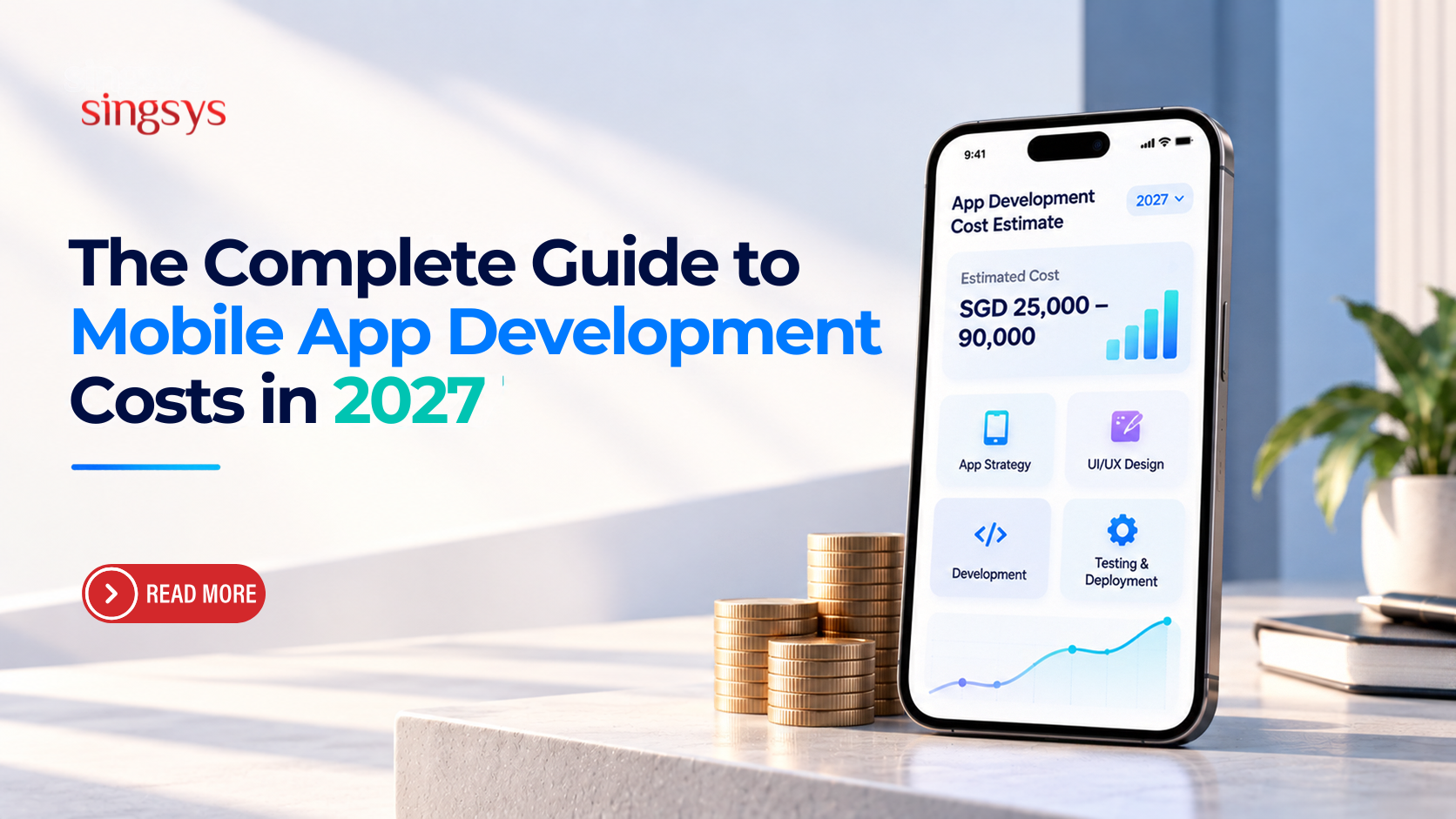
Estimated Cost: SGD 25,000–90,000
Suitable for businesses needing customer accounts, payment integration, push notifications, an admin dashboard, and a more customised user experience.
Typical Timeline: 3–6 months
3. Complex Mobile Application
Estimated Cost: SGD 60,000–180,000+
Suitable for marketplaces, on-demand platforms, and apps involving multiple user roles, real-time features, advanced integrations, and more complex backend systems.
Typical Timeline: 4–12 months
4. Enterprise Application
Estimated Cost: SGD 150,000–350,000+
Suitable for large organisations requiring enterprise integrations, advanced security, complex workflows, scalability, and extensive testing.
Typical Timeline: 9–18 months
Note: These are planning estimates, not fixed 2027 quotations. The categories overlap because agencies define project complexity differently.
1. Key Factors That Affect Mobile App Development Costs
Several factors determine the total investment required to build a mobile application.
App Complexity and Features
The number and technical complexity of features are major cost drivers. A simple information app requires less engineering than a marketplace with customer and vendor accounts, payments, messaging, and real-time tracking.
Features that can increase the budget include:
User authentication and role-based access
GPS tracking and location services
Real-time messaging and notifications
Payment gateways and subscriptions
AI-powered recommendations and chatbots
Analytics dashboards and reporting
Complex third-party integrations
Prioritising essential features for launch can help businesses manage costs without compromising the core customer experience.
Platform Selection
Businesses need to decide whether to develop for iOS, Android, or both.
Native development involves separate platform-specific engineering, while cross-platform frameworks such as Flutter and React Native can share much of the codebase.
Cross-platform development may reduce duplicated work, although complex functionality and platform-specific requirements can still add development effort. The right approach depends on the target audience, performance needs, and long-term roadmap.
UI/UX Design
A professional interface helps users navigate an app, complete tasks, and engage with its features.
Design costs depend on the number of screens, user journeys, custom components, prototyping, and usability testing. Apps with complex workflows or highly customised interfaces generally require more design work.
2. Development Team and Technology Costs
The development team’s composition and expertise influence the overall project budget.
A typical team may include:
Project manager
UI/UX designer
Mobile app developers
Backend developer
Quality assurance engineer
DevOps or cloud engineer
A smaller project may require fewer specialists, while a larger project may need dedicated teams for architecture, security, integrations, and quality assurance.
Singapore-based development providers may quote fixed project fees or hourly rates, depending on the engagement. When comparing proposals, businesses should check whether design, project management, testing, deployment, and post-launch support are included.
Technology choices also matter. Frameworks, backend architecture, cloud services, databases, and development tools should be selected according to the app’s requirements rather than popularity alone.
3. Backend Development and Third-Party Integrations
The backend powers essential functions such as user accounts, databases, application logic, notifications, and data exchange.
An app with basic data storage may require a relatively simple backend, while a multi-vendor platform or enterprise application may need complex architecture and integrations.
Common integrations include:
Payment gateways
Maps and navigation
CRM and ERP systems
Social login
SMS and email services
Analytics platforms
AI services
Singapore-specific requirements can include PayNow-compatible payment flows, local business systems, and services that support the app’s operational needs.
Third-party providers may also charge recurring fees based on usage, transactions, or subscription tiers. These expenses should be included in the total cost of ownership.
4. Testing, Security, and Deployment
Testing helps ensure the app works reliably across supported devices, operating systems, and network conditions.
Budget for functional testing, performance testing, usability checks, security reviews, and app store deployment.
For applications that collect or process personal data in Singapore, include appropriate privacy and security requirements under the Personal Data Protection Act (PDPA). The exact work required depends on the app’s data practices and risk profile.
Important testing activities include:
Functional testing
Device and operating system compatibility testing
Performance and load testing
Usability testing
Security testing
API and integration testing
User acceptance testing
Deployment also involves preparing app store listings, release builds, configurations, and platform-specific compliance requirements.
These activities should be budgeted from the beginning rather than treated as last-minute tasks.
5. Native vs Cross-Platform Development Costs
Choosing between native and cross-platform development can affect both initial investment and long-term maintenance.
Native development can be appropriate when an application needs platform-specific capabilities, specialised performance, or a highly customised experience.
Cross-platform development can be useful when businesses want to launch on iOS and Android with a shared codebase. It may help control initial development and maintenance effort, but it is not automatically less expensive for every project.
Compare proposals based on the same feature list, supported devices, integrations, testing requirements, and future maintenance commitments.
6. Hidden and Ongoing Costs of Mobile App Development
The initial build is only one part of the total investment. Businesses should also account for recurring expenses and future improvements.
Important ongoing costs include:
Cloud hosting and database services
Bug fixes and operating system updates
Security monitoring and maintenance
Third-party API and software subscription fees
Customer support
Feature enhancements
Analytics and performance monitoring
Marketing and user acquisition
As an initial budgeting guideline, consider reserving approximately 15–25% of the original development cost annually for maintenance and improvements. Adjust this according to the application’s complexity, infrastructure, and support requirements.
Some apps may require a smaller maintenance budget, while applications with extensive integrations, high traffic, or strict security needs may require more.
7. How to Reduce Mobile App Development Costs
Managing development spending does not mean compromising on essential quality. A structured development strategy can help businesses control costs while building a useful product.
Start with an MVP
Build the essential user journey first and validate the concept before adding advanced features. A minimum viable product can help businesses understand customer needs and avoid spending on functionality that users may not require.
Prepare Clear Requirements
Define user roles, screens, integrations, and expected outcomes before development begins. Clear requirements reduce ambiguity, rework, and unexpected changes during the project.
Choose Suitable Technology
Evaluate native and cross-platform options against the app’s actual technical requirements. Consider long-term maintenance, performance, available expertise, and future expansion.
Develop in Phases
Release functionality incrementally and use feedback to guide subsequent investment. This approach makes it easier to identify issues and adjust priorities during development.
Plan for Scalability
Build a maintainable foundation without paying for unnecessary enterprise complexity at launch. Consider the architecture and infrastructure changes that may be needed as the application grows.
Compare Detailed Quotations
Check deliverables, exclusions, timelines, payment milestones, and support terms rather than comparing headline prices alone. Make sure each provider is quoting for a comparable scope of work.
Plan Your Mobile App Investment for 2027
The cost of mobile app development in Singapore in 2027 will depend on the product’s complexity, platform, design, backend architecture, integrations, and ongoing support needs. Published agency prices provide useful starting points, but a reliable project budget requires a clearly defined scope and technical assessment.
For startups, an MVP-first approach can help validate demand and control initial spending. For established businesses, security, integrations, and scalability may require a larger upfront investment.
Working with an experienced mobile app development company can help turn business requirements into a practical development roadmap, prioritise features, and establish a transparent budget for building and maintaining the application.
With careful planning and the right technology strategy, businesses can build mobile applications that support customer needs, improve operational efficiency, and create opportunities for future growth.
India’s grocery shopping landscape is rapidly becoming more digital, creating opportunities for startups to build convenient and scalable grocery delivery platforms. Consumers increasingly expect to discover products, compare prices, place […]
The mobile app market continues to create new opportunities for businesses, entrepreneurs, and startups. As users increasingly rely on smartphones for shopping, financial management, entertainment, education, healthcare, productivity, and everyday […]
Moving to Singapore is an exciting opportunity, whether you’re relocating for work, education, or business. Known for its modern infrastructure, efficient public services, and multicultural environment, Singapore offers an excellent […]