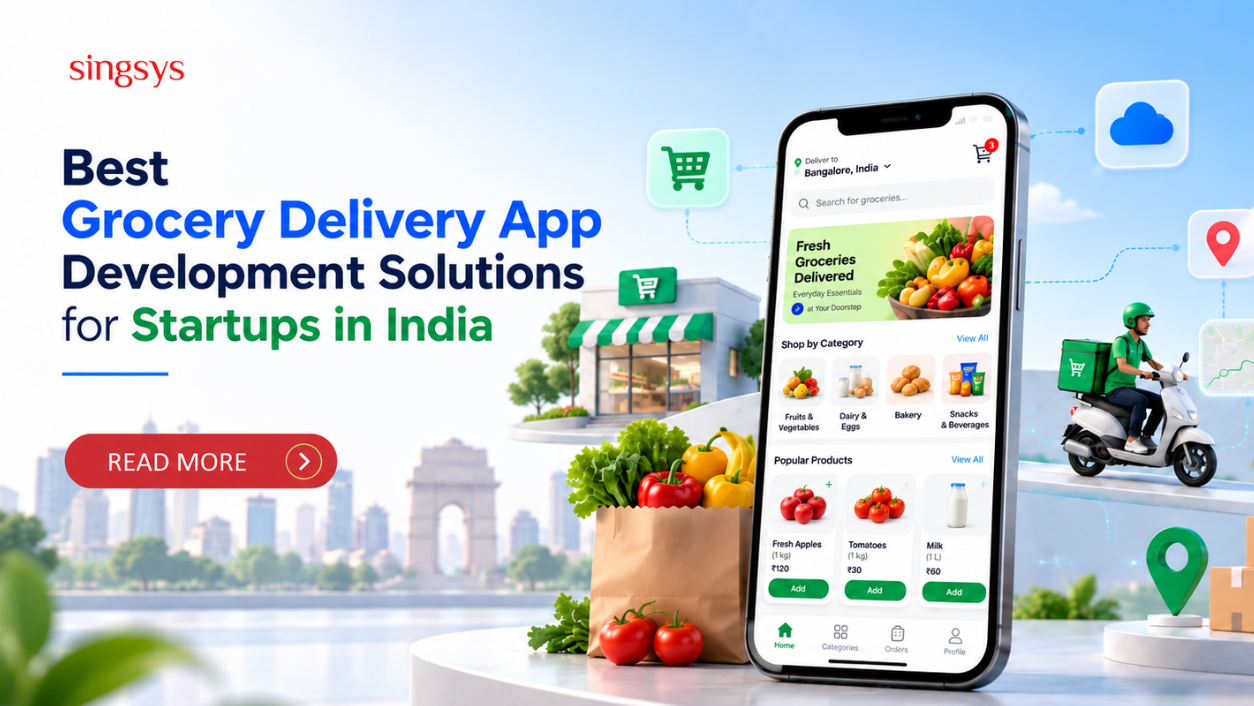
India’s grocery shopping landscape is rapidly becoming more digital, creating opportunities for startups to build convenient and scalable grocery delivery platforms. Consumers increasingly expect to discover products, compare prices, place orders, make digital payments, and track deliveries directly from their smartphones.
For startups, launching a grocery delivery app can open multiple revenue opportunities. However, success depends on more than simply creating an online store. A competitive platform needs a smooth user experience, reliable inventory management, efficient delivery operations, secure payments, and technology that can scale as the business grows.
Choosing the right grocery delivery app development company can help startups build these capabilities while keeping the application flexible for future expansion.
Why Startups Should Consider Grocery Delivery App Development
The traditional grocery shopping experience involves visiting stores, searching for products, waiting at checkout counters, and transporting purchases home.
A grocery delivery app brings many of these activities into a single digital experience.
For startups, a well-designed grocery platform can support different business models, including:
Online grocery stores
Local supermarket marketplaces
Hyperlocal delivery platforms
Subscription-based grocery services
Specialty food and grocery platforms
Multi-vendor grocery marketplaces
Startups can also differentiate their platforms by focusing on specific locations, customer segments, product categories, or delivery models rather than competing across every market from day one.
What a Grocery Delivery App Should Include
A modern grocery delivery ecosystem generally requires more than one application. The most effective solutions connect customers, delivery partners, vendors, and administrators through a unified platform.
Each component performs a different function while sharing relevant data through the backend.
Let’s explore the key components and features startups should consider.
1. Customer Grocery Delivery App
The customer-facing mobile application is the primary interaction point between the startup and its users.
The app should make product discovery, ordering, payment, and tracking simple.
Essential features can include:
User registration and login
Product search and filters
Grocery categories
Product details
Shopping cart
Wishlist
Address management
Delivery slot selection
Order placement
Digital payments
Order tracking
Push notifications
Ratings and reviews
Order history
A clean interface and fast checkout experience can help reduce friction during the purchasing journey.
2. Delivery Partner App
Efficient last-mile delivery is critical to a grocery delivery business.
A dedicated delivery partner app can help drivers receive orders, navigate routes, update delivery status, and communicate relevant information to customers or administrators.
Useful features include:
Delivery partner registration
Order assignment
GPS navigation
Route optimisation
Availability status
Delivery status updates
Customer contact options
Earnings dashboard
Delivery history
Notifications
The application should be designed for quick interaction because delivery partners may use it while managing multiple deliveries.
3. Store & Vendor App
For a multi-vendor grocery marketplace, stores need a dedicated interface to manage their products and orders.
A vendor application or web dashboard can allow retailers to:
Add and update products
Manage prices
Update inventory
Accept or reject orders
Process orders
Manage delivery preparation
View sales information
Track customer orders
Manage promotions
This creates a connected ecosystem between retailers and customers while reducing manual operational work.
4. Admin Management Panel
The admin dashboard acts as the central control system for the grocery delivery platform.
Administrators should be able to manage users, stores, delivery partners, products, orders, payments, promotions, and platform analytics from one location.
Important functions may include:
User management
Vendor management
Delivery management
Product management
Order monitoring
Payment management
Commission management
Coupon management
Analytics and reporting
Customer support
Content management
A well-designed dashboard can give startups greater visibility into their operations as the platform grows.
5. AI-Powered Grocery Recommendations
Artificial intelligence can add another layer of personalisation to grocery applications.
An AI-powered recommendation engine can analyse purchasing behaviour, frequently ordered products, browsing patterns, preferences, and shopping frequency to suggest relevant products.
For example, if a customer regularly purchases breakfast items, the application could surface related products or remind them when they may need to reorder.
AI can also support:
Personalised product recommendations
Smart search
Frequently purchased item suggestions
Shopping list generation
Demand forecasting
Customer support chatbots
These capabilities can help startups create a more personalised shopping experience.
6. Real-Time Inventory Management
Inventory accuracy is particularly important for grocery businesses because products may become unavailable quickly.
A grocery delivery app development solution should provide mechanisms for stores and administrators to update inventory efficiently.
Real-time inventory management can help businesses:
Track product availability
Reduce cancelled orders
Identify low-stock products
Manage product variants
Update prices
Synchronise store inventory
For larger operations, inventory data can also be integrated with existing point-of-sale or enterprise systems.
7. Multiple Payment Options
A seamless payment experience is essential for an online grocery platform.
Startups can consider integrating multiple payment methods based on their target customers and operating regions.
These may include:
UPI
Credit and debit cards
Net banking
Mobile wallets
Cash on delivery
Saved payment methods
Payment processing should incorporate appropriate security measures and reliable transaction handling to minimise failed payments and improve customer confidence.
8. Location-Based Delivery & Tracking
Location technology plays an important role in hyperlocal grocery delivery.
Customers should be able to enter their delivery address, determine service availability, select delivery slots, and track orders.
GPS-based tracking can help delivery partners navigate routes while allowing customers to see relevant order status updates.
For startups, location-based technology can also help define delivery zones and optimise operational coverage.
9. Offers, Loyalty & Subscription Features
Customer retention is just as important as customer acquisition.
Grocery delivery startups can introduce features that encourage repeat purchases, such as:
First-order discounts
Coupon codes
Loyalty points
Referral rewards
Cashback
Membership plans
Free-delivery subscriptions
Personalised offers
Subscription models can be particularly useful for customers who frequently order household essentials.
The right combination of promotions and loyalty features can help create recurring purchasing behaviour.
10. Scalable Cloud-Based Architecture
A grocery platform may start with a small number of customers and stores but eventually need to handle significantly higher traffic and transaction volumes.
A cloud-based grocery delivery app can provide the flexibility needed to scale infrastructure as demand changes.
Cloud architecture can support:
Scalable application servers
Cloud databases
Automated backups
API integrations
Data analytics
Monitoring
Security controls
High availability
Startups should also consider modular architecture so that new features can be introduced without significantly disrupting existing systems.
How to Choose the Right Grocery Delivery App Development Company
Choosing a development partner is an important decision because the technology foundation can influence the platform’s long-term scalability and maintenance requirements.
When evaluating a grocery delivery app development company, consider:
Experience in mobile app development
Understanding of marketplace architecture
Backend and API development capabilities
Cloud technology expertise
UI/UX design capabilities
Payment and third-party integration experience
Security practices
Testing and quality assurance
Post-launch maintenance
Scalability planning
Startups should also define their MVP before development begins. Launching with essential features can allow businesses to validate their concept and gather customer feedback before investing in advanced functionality.
Build a Scalable Grocery Delivery Platform
The right grocery delivery app development solution can help Indian startups turn a local grocery concept into a scalable digital platform. A successful solution should bring together customers, stores, delivery partners, and administrators through a secure and connected ecosystem.
From real-time inventory and digital payments to AI-powered recommendations, GPS tracking, loyalty programmes, and cloud infrastructure, startups can select features according to their business model and growth stage.
Rather than building every feature at once, startups can begin with a focused MVP and progressively introduce advanced capabilities based on customer behaviour and operational requirements.
With the right technology strategy and an experienced mobile app development company, a grocery delivery startup can build a platform designed for usability, operational efficiency, and long-term growth.
The mobile app market continues to create new opportunities for businesses, entrepreneurs, and startups. As users increasingly rely on smartphones for shopping, financial management, entertainment, education, healthcare, productivity, and everyday […]
Moving to Singapore is an exciting opportunity, whether you’re relocating for work, education, or business. Known for its modern infrastructure, efficient public services, and multicultural environment, Singapore offers an excellent […]
Launching an app is exciting, but getting the dreaded “Your app has been rejected” email from Apple can be frustrating. In 2026, the App Store review process has become stricter […]