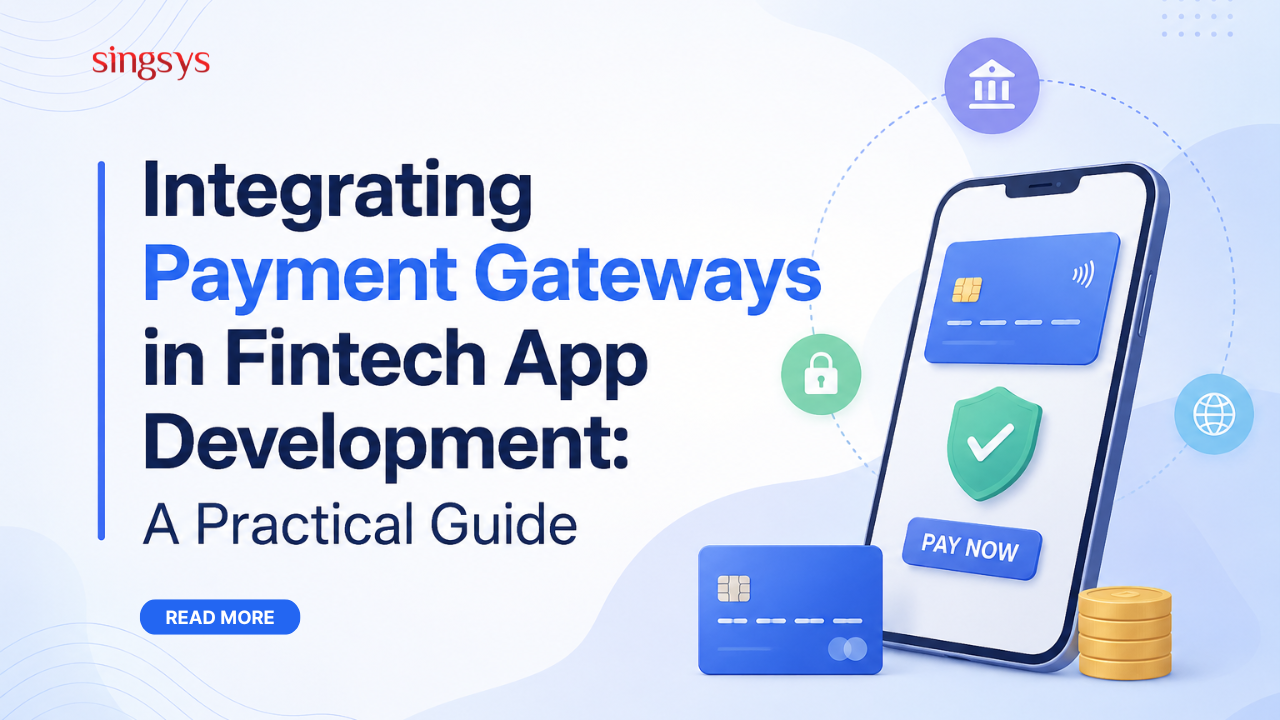
The rapid growth of digital payments has transformed how businesses and consumers manage financial transactions. Whether you’re ordering food, shopping online, paying utility bills, or transferring money internationally, secure digital payments have become an essential part of everyday life.
For businesses entering the fintech market, building a feature-rich application is only one part of the journey. One of the most critical decisions is choosing and integrating the right payment gateway. A seamless payment experience directly influences customer satisfaction, security, compliance, and business growth.
If you’re planning to build a fintech application, partnering with an experienced Fintech app development company can simplify the integration process while ensuring your application meets industry regulations and delivers a secure user experience.
In this guide, we’ll explore everything you need to know about payment gateway integration in fintech app development.
A payment gateway is a secure technology that authorises and processes online payments between customers, merchants, banks, and payment processors.
Whenever a customer makes an online payment, the gateway securely encrypts sensitive financial information and facilitates communication between all involved parties before confirming or declining the transaction.
Without a payment gateway, digital transactions cannot be processed securely or efficiently.
Why Payment Gateway Integration Matters
Payment gateway integration is much more than simply allowing customers to pay online. It forms the foundation of trust within any fintech application.
A properly integrated payment system helps businesses:
Process payments securely
Reduce transaction failures
Support multiple payment methods
Improve customer confidence
Minimise fraud risks
Ensure regulatory compliance
Deliver faster transaction processing
In today’s competitive fintech landscape, even a few seconds of delay during checkout can lead users to abandon the transaction.
Key Features Every Modern Payment Gateway Should Offer
Choosing the right gateway starts with understanding the features your users expect.
Strong Security
Security remains the highest priority in financial applications.
Modern payment gateways typically include:
End-to-end encryption
Tokenisation
Multi-factor authentication
Fraud detection
Real-time risk monitoring
PCI DSS compliance
These security layers help protect both businesses and customers from cyber threats.
Multiple Payment Methods
Users expect flexibility when making payments.
Your fintech app should ideally support:
Credit cards
Debit cards
Digital wallets
Bank transfers
QR code payments
Buy Now, Pay Later (BNPL)
UPI (where applicable)
International payment options
The wider the payment options, the better the customer experience.
Fast Processing
Customers expect transactions to complete almost instantly.
An efficient payment gateway reduces waiting times and provides immediate confirmation, creating a smooth and reliable payment experience.
Currency Support
If your application serves global customers, multi-currency support becomes essential.
This enables users to pay using their preferred currency while simplifying international business operations.
Mobile Optimisation
Since most fintech users access services through smartphones, payment gateways must perform flawlessly across Android and iOS devices.
The payment process should remain fast, responsive, and easy to complete on smaller screens.
Steps to Integrate a Payment Gateway into a Fintech App
Payment gateway integration involves much more than connecting an API. It requires careful planning, security implementation, testing, and ongoing monitoring.
1. Define Your Business Requirements
Start by understanding your business model.
Ask questions like:
Will users make one-time payments?
Are recurring subscriptions required?
Will funds be transferred between users?
Are international payments necessary?
Which countries will the app serve?
The answers will influence your gateway selection.
2. Select the Right Payment Gateway
Not every payment gateway fits every fintech solution.
When evaluating providers, consider:
Transaction fees
Security certifications
API documentation
Supported payment methods
Geographic availability
Settlement time
Customer support
Scalability
An experienced Fintech app development company can help evaluate different providers based on your business goals rather than simply selecting the most popular option.
3. Complete Merchant Verification
Before activating payment processing, businesses typically need to complete Know Your Business (KYB) verification.
This usually includes:
Business registration documents
Bank account verification
Tax information
Identity verification
Completing this process early helps avoid launch delays.
4. Integrate APIs Securely
Payment gateways provide APIs that allow applications to initiate and manage transactions.
Developers must ensure:
Secure authentication
Encrypted communication
Proper error handling
Transaction validation
Secure storage of tokens
Sensitive card information should never be stored directly within your application unless absolutely necessary and compliant with relevant standards.
5. Test Thoroughly
Testing is a critical phase before going live.
Developers should test:
Successful payments
Failed transactions
Refunds
Chargebacks
Network interruptions
Payment cancellations
Duplicate payment prevention
Testing ensures users experience smooth transactions under all conditions.
6. Monitor Performance After Launch
Integration doesn’t end after deployment.
Businesses should continuously monitor:
Transaction success rate
Payment failures
Fraud attempts
Server performance
API response time
User feedback
Continuous monitoring helps improve both security and customer satisfaction.
Common Challenges During Payment Gateway Integration
Even experienced development teams encounter integration challenges.
Some of the most common include:
Regulatory Compliance
Fintech applications often operate under strict financial regulations.
Depending on your target market, you may need to comply with:
PCI DSS
GDPR
PSD2
AML regulations
KYC requirements
Compliance should be considered from the beginning rather than treated as an afterthought.
Fraud Prevention
As online transactions grow, fraud techniques continue to evolve.
Businesses should implement:
Behavioural analytics
AI-powered fraud detection
Device fingerprinting
Velocity checks
Transaction monitoring
A proactive fraud prevention strategy helps protect both users and business revenue.
Multiple Banking Systems
Every bank processes transactions differently.
Supporting multiple financial institutions may require additional development, testing, and ongoing maintenance.
Handling Failed Transactions
Not every payment succeeds.
Applications should provide clear messages explaining what happened while guiding users through retry options without causing confusion.
A transparent payment experience helps build customer trust.
Best Practices for Payment Gateway Integration
Businesses can improve payment success rates by following proven best practices.
Prioritise User Experience
The payment journey should be simple and intuitive.
Avoid unnecessary steps that increase checkout abandonment.
Never Compromise on Security
Security features should always be implemented without affecting usability.
Customers appreciate visible trust signals while expecting their financial data to remain protected.
Optimise Performance
Slow payment pages lead to lost revenue.
Optimising API requests, minimising server delays, and improving app performance contribute to faster transactions.
Support Future Growth
Your payment infrastructure should scale alongside your business.
Choose solutions that can handle increased transaction volumes without requiring major redevelopment.
Keep Software Updated
Payment providers regularly release security updates and API improvements.
Maintaining current integrations helps reduce vulnerabilities and ensures compatibility.
Why Work with a Fintech App Development Company?
Payment gateway integration requires expertise across software engineering, financial regulations, cybersecurity, and user experience design.
An experienced Fintech app development company brings together specialists who understand these interconnected requirements.
Professional development teams help businesses:
Choose the right payment gateway
Build secure transaction systems
Implement compliance requirements
Reduce development risks
Improve scalability
Deliver faster project completion
Provide ongoing technical support
Instead of spending valuable time solving complex integration challenges internally, businesses can focus on growth while experienced developers manage the technical implementation.
The Future of Payment Gateway Integration
Payment technology continues to evolve rapidly.
Emerging trends include:
AI-powered fraud prevention
Embedded finance
Biometric authentication
Real-time payment processing
Open banking integration
Blockchain-enabled payments
Voice-activated transactions
Digital identity verification
Businesses that embrace these innovations will be better positioned to meet changing customer expectations and remain competitive in the evolving fintech landscape.
Final Thoughts
Payment gateway integration is one of the most important components of any fintech application. A secure, reliable, and user-friendly payment experience builds customer trust, improves transaction success rates, and supports long-term business growth.
From selecting the right payment provider to ensuring compliance and implementing advanced security measures, every step plays a vital role in creating a successful fintech product.
Working with an experienced Fintech app development company ensures your payment infrastructure is built on industry best practices, enabling your application to deliver secure, seamless, and scalable financial services from day one.
Ready to Build a Secure Fintech Application?
Whether you’re developing a digital wallet, lending platform, investment app, payment solution, or banking application, choosing the right technology partner makes all the difference.
At Singsys, we specialise in developing secure, scalable, and innovative fintech applications with seamless payment gateway integration. Our team helps businesses create high-performance financial solutions that prioritise security, compliance, and exceptional user experiences.
Contact Singsys today to discuss your fintech app development project and discover how we can turn your vision into a secure, future-ready digital solution.
Tanu Vishwakarma, a seasoned social media marketer, possesses a passion for promoting businesses online. She specialises in crafting creative strategies to captivate potential customers. Her dedication to staying updated on industry trends ensures that her methods are always effective. Tanu thrives on helping businesses shine in the digital realm.
Mobile applications have become an essential investment for businesses in Singapore looking to improve customer engagement, streamline operations, and expand their digital presence. From startups launching their first product to […]
India’s grocery shopping landscape is rapidly becoming more digital, creating opportunities for startups to build convenient and scalable grocery delivery platforms. Consumers increasingly expect to discover products, compare prices, place […]
The mobile app market continues to create new opportunities for businesses, entrepreneurs, and startups. As users increasingly rely on smartphones for shopping, financial management, entertainment, education, healthcare, productivity, and everyday […]