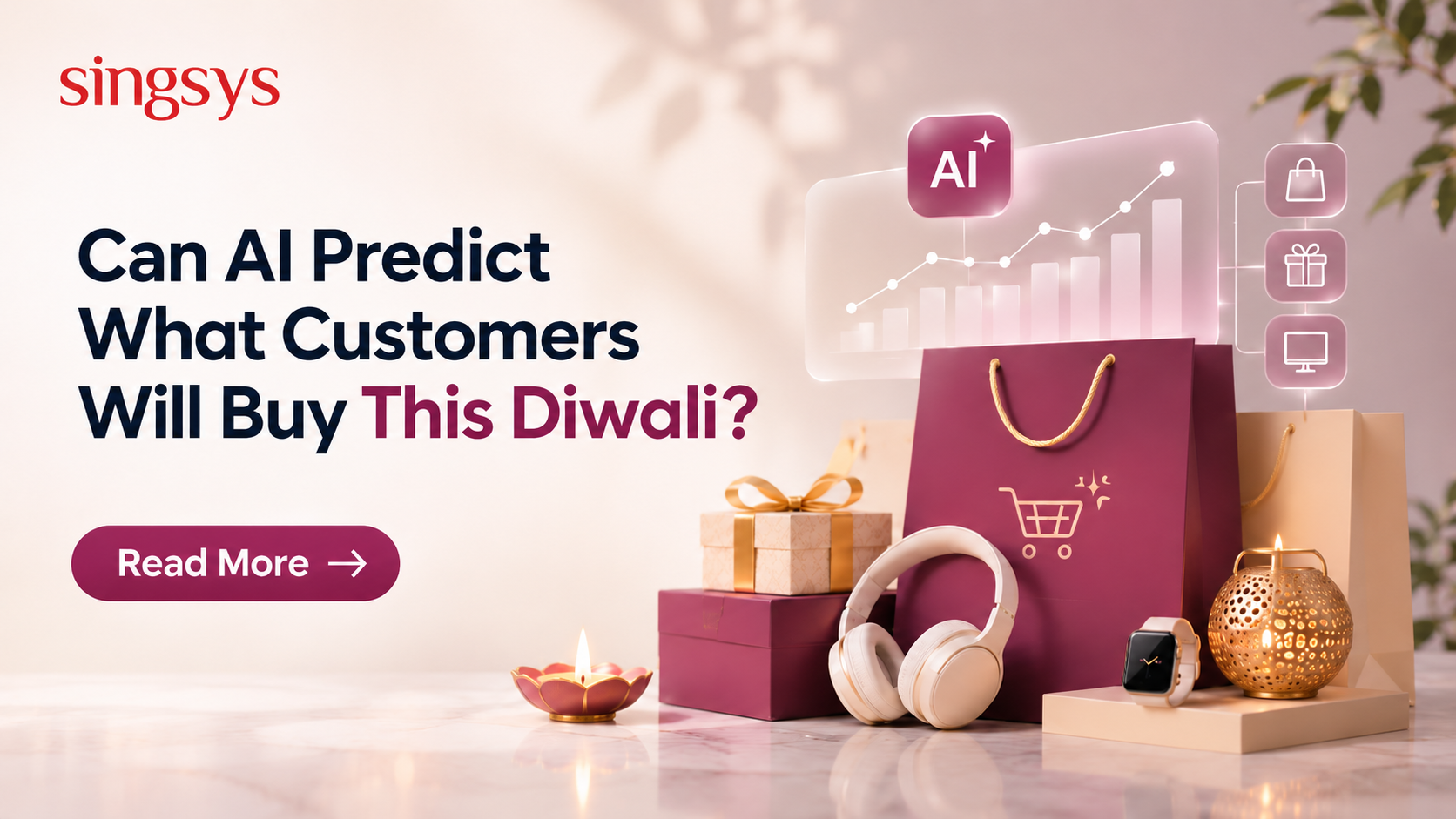
Diwali is one of the biggest shopping seasons for businesses in India. From electronics and fashion to home décor, jewellery, and festive gifts, customer demand increases across multiple product categories. For retailers and e-commerce businesses, understanding what customers are likely to purchase during this period can make a significant difference to sales, inventory planning, and marketing performance.
But what if businesses could anticipate customer preferences before shoppers even make a purchase?
Artificial Intelligence (AI) is making this increasingly possible. By analysing shopping patterns, browsing behaviour, purchase histories, and market trends, AI-powered systems can help businesses forecast demand and understand what customers may want to buy this Diwali.
Although AI cannot predict every purchase with complete accuracy, it can provide valuable insights that help businesses make smarter decisions during the festive season.
Every online interaction provides useful information about customer preferences. Product searches, website visits, shopping cart activity, previous purchases, and product reviews can reveal what people are interested in buying.
AI systems analyse these large volumes of information to identify patterns that may not be immediately visible through manual analysis.
For example, if customers frequently search for wireless headphones, smartwatches, and home entertainment devices before Diwali, AI can identify growing interest in these categories.
One of the most useful applications of AI during the festive season is predictive analytics.
Predictive analytics uses historical data, statistical techniques, and machine learning algorithms to estimate future outcomes. For retailers, this means analysing previous Diwali sales, seasonal demand, pricing changes, and customer activity to forecast upcoming shopping trends.
For example, an electronics retailer can examine previous festive sales to estimate demand for smartphones, televisions, and smart home devices. AI can also consider current browsing trends and promotional activity to refine these estimates.
This helps businesses:
Prepare inventory according to expected demand.
Identify products that may sell quickly.
Reduce excess stock and potential shortages.
Plan festive discounts and promotional campaigns.
Allocate marketing budgets more effectively.
These predictions are not guarantees. Unexpected market changes, competitor offers, economic conditions, and changing consumer preferences can influence actual sales. However, AI-based forecasting gives businesses a more informed starting point.
During Diwali, customers often explore multiple products before deciding what to purchase. Personalised recommendations can make this shopping experience easier by showing products relevant to individual interests.
AI-powered recommendation engines analyse browsing history, previous orders, product interactions, and similar customer preferences to suggest relevant items.
For instance, a customer shopping for a new television might receive recommendations for soundbars, streaming devices, or entertainment accessories. Someone browsing festive home décor may see suggestions for decorative lighting, cushions, and gift items.
These recommendations can help businesses:
Improve product discovery.
Increase cross-selling and upselling opportunities.
Deliver more relevant shopping experiences.
Encourage customers to explore additional products.
Improve the likelihood of conversions.
Rather than displaying identical products to every visitor, businesses can use AI to make product discovery more personalised.
4. AI Helps Identify Emerging Festive Shopping Trends
Customer preferences can change quickly during the festive season. A product category that receives limited attention initially may become popular because of social media trends, influencer recommendations, or changing consumer interests.
AI can analyse information from product searches, website interactions, sales records, and other available market signals to identify emerging patterns.
For example, increased interest in sustainable gifts, smart home devices, or premium festive packaging may indicate changing shopping preferences.
Businesses can use these insights to:
Identify products gaining popularity.
Monitor changes in customer interests.
Discover emerging product categories.
Adjust promotional campaigns.
Respond more quickly to market demand.
This is particularly valuable for retailers managing large product catalogues and competing in fast-moving e-commerce markets.
5. Dynamic Pricing and Smarter Festive Offers
Discounts and promotional offers play an important role in Diwali shopping. However, offering the same discount across every product may not always produce the best results.
AI-powered pricing systems can analyse factors such as product demand, inventory levels, competitor pricing, and customer behaviour to help businesses evaluate pricing strategies.
For example, if a particular product category is receiving strong demand, a retailer may adjust its promotional strategy based on stock availability and sales objectives. Products with slower movement may receive targeted offers to encourage purchases.
AI can also help businesses identify customer segments that may respond better to specific promotions.
However, pricing decisions should consider profit margins, customer trust, and applicable regulations. Excessively frequent or unclear price changes can negatively affect the shopping experience.
6. AI Chatbots Make Festive Shopping Easier
During Diwali, customer support teams often experience an increase in enquiries about product availability, delivery schedules, discounts, return policies, and order status.
AI-powered chatbots can handle many routine questions, helping customers find information without waiting for a support representative.
For example, a customer looking for a Diwali gift can ask an AI chatbot for recommendations based on budget, recipient preferences, and product categories.
Businesses can integrate AI chatbot development services into their websites and mobile applications to provide conversational assistance, answer frequently asked questions, and guide customers through product discovery.
This can improve response times while allowing human support teams to focus on more complex customer concerns.
7. What Businesses Need to Make AI Predictions More Accurate
AI predictions are only as useful as the information and systems behind them. Businesses should not expect accurate forecasts simply by adopting an AI tool.
Several factors influence the quality of AI-driven customer insights:
Quality of data: Incomplete, outdated, or inconsistent customer information can affect prediction accuracy.
Historical sales information: Previous festive-season performance can provide useful patterns, although businesses should also consider changing market conditions.
Real-time customer behaviour: Browsing activity, searches, and shopping cart interactions help systems identify current customer interests.
Suitable AI models: Different business problems require different analytical techniques and models.
Continuous evaluation: Businesses should compare predicted demand with actual sales and refine their forecasting approach over time.
Organisations looking to build more specialised forecasting systems can explore AI development services to create solutions aligned with their data, business processes, and operational requirements.
So, can AI predict what customers will buy this Diwali? It can certainly help businesses make more informed estimates by analysing customer behaviour, forecasting demand, identifying shopping trends, and delivering personalised recommendations.
However, AI does not know exactly what every customer will purchase. Its real value lies in recognising patterns, estimating possibilities, and helping businesses respond more intelligently to changing demand.
For retailers and e-commerce companies, combining AI-driven insights with quality data and a strong customer experience can make festive-season planning more effective.
This Diwali, businesses that understand their customers better may be better prepared to deliver the products, offers, and shopping experiences people are looking for.
Artificial Intelligence is becoming an essential part of modern business operations. From automating customer support to analysing large datasets, businesses are adopting AI to improve productivity, reduce manual work, and […]
Online shopping has made purchasing products easier than ever, but convenience alone is no longer enough to satisfy modern consumers. Customers increasingly expect online stores to understand their preferences, recommend […]
Artificial intelligence has changed how people create, consume, and share information. From writing blog posts and business reports to generating news summaries and answering everyday questions, AI-generated content is now […]