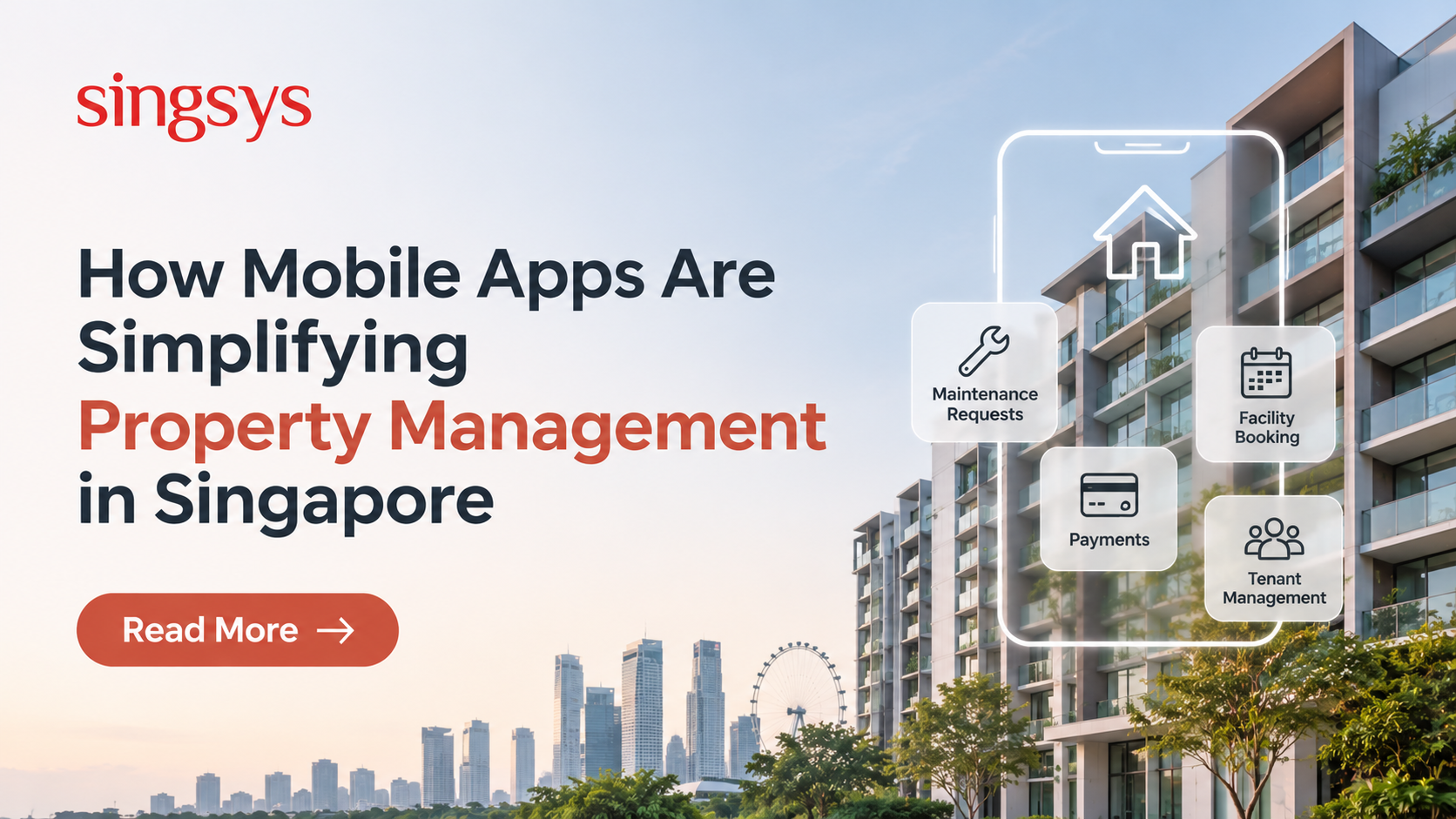
Singapore’s real estate market is becoming increasingly technology-driven. From residential condominiums and commercial buildings to serviced apartments and rental properties, managing real estate involves coordinating multiple activities, including tenant communication, maintenance requests, rental payments, inspections, and documentation
Traditionally, many property management tasks relied on phone calls, emails, spreadsheets, and manual record-keeping. While these methods can work for smaller portfolios, they become increasingly difficult to manage as property portfolios grow and tenant expectations change.
Mobile applications are helping property owners, landlords, and property management companies simplify these responsibilities. By bringing essential operations into a single digital platform, property management apps improve accessibility, streamline communication, and make everyday tasks more efficient.
Let’s explore how mobile apps for property management in Singapore are transforming the way real estate assets are managed.
Managing multiple properties often requires switching between different tools to access tenant information, payment records, maintenance schedules, and property documents.
A dedicated property management app can bring these functions together in one place. Property managers can access relevant information through their smartphones without depending on physical files or separate communication channels.
Common features include:
Property and unit information management.
Tenant profiles and rental agreements.
Maintenance records and inspection schedules.
Payment histories and outstanding balances.
Important documents and notifications.
For property management companies handling multiple residential or commercial buildings, centralised access makes it easier to monitor daily operations and maintain consistent records.
2. Faster Tenant Communication and Support
Communication plays an important role in maintaining positive landlord-tenant relationships. Delayed responses to maintenance complaints, payment queries, or general requests can create frustration and affect tenant satisfaction.
Mobile applications provide dedicated communication channels where tenants can submit enquiries, receive announcements, and track the status of their requests.
For example, a condominium resident in Singapore can use a property management app to report a faulty lift, request assistance with a facility booking, or receive updates about scheduled maintenance.
Property managers can also use push notifications to communicate:
Building maintenance announcements.
Water or electricity service interruptions.
Security updates.
Facility availability.
Important payment reminders.
By making communication more accessible, mobile apps help reduce repetitive enquiries and keep tenants informed.
3. Simplified Rental Payments and Financial Tracking
Collecting rental payments and maintaining accurate financial records can become challenging when managing multiple tenants and properties.
Mobile applications can simplify these processes by allowing tenants to view payment details, receive reminders, and access available digital payment options.
Depending on the platform and payment integrations, property managers can also monitor payment statuses and maintain transaction histories.
Useful financial management features include:
Rental payment reminders.
Digital payment integration.
Outstanding balance tracking.
Payment receipts and transaction records.
Maintenance expense tracking.
Financial summaries and reports.
For landlords managing multiple rental units, these features can reduce manual follow-ups and provide better visibility into property-related finances.
4. Efficient Maintenance Requests and Work Order Management
Property maintenance is one of the most time-consuming responsibilities for building managers and landlords. Plumbing issues, electrical faults, air-conditioning problems, and equipment failures require timely attention.
Without a structured system, maintenance requests can get lost in emails or messaging conversations.
A property management app can provide a dedicated maintenance request feature where tenants submit complaints, upload photographs, and describe the issue.
Property managers can then:
Review incoming maintenance requests.
Assign tasks to the appropriate technicians or service providers.
Set priorities based on urgency.
Track work order progress.
Notify tenants when the issue is resolved.
This creates a more organised maintenance workflow and improves accountability.
For larger residential developments and commercial properties in Singapore, such functionality can help management teams coordinate maintenance activities across multiple units and facilities.
5. Better Facility Booking and Visitor Management
Many residential developments in Singapore offer shared amenities such as swimming pools, gyms, function rooms, barbecue areas, and recreational facilities.
Managing reservations manually can create scheduling conflicts and unnecessary administrative work.
Mobile apps can simplify facility booking by allowing residents to check availability, select time slots, and receive booking confirmations directly through their devices.
Some applications also support visitor registration, allowing residents to submit visitor details in advance and helping security teams manage entry more efficiently.
Depending on the development’s requirements, additional features may include:
QR-code-based visitor access.
Digital visitor passes.
Facility booking calendars.
Booking cancellation and rescheduling.
Visitor entry notifications.
These features improve convenience for residents while helping property management teams maintain better control over shared facilities and visitor access.
6. Digital Documents and Inspection Management
Property management involves handling numerous documents, including tenancy agreements, inspection reports, maintenance records, invoices, and compliance-related paperwork.
Managing these documents manually can make information difficult to retrieve, especially when several properties are involved.
Mobile applications provide digital document storage and access, helping authorised users retrieve important information when required.
Property managers can also use mobile inspection tools to record property conditions, upload photographs, and document issues during site visits.
For example, a property manager conducting an apartment inspection can record damaged fixtures, attach photographs, and create a maintenance follow-up without returning to the office.
Digital documentation improves record accessibility and helps establish a more organised property management process.
7. Real-Time Insights Through Analytics and Reporting
Property managers need accurate information to understand operational performance and make informed decisions.
Mobile applications with analytics and reporting capabilities can turn property-related information into useful business insights.
Depending on the available integrations, dashboards can display:
Occupancy and vacancy information.
Rental collection status.
Pending maintenance requests.
Maintenance response times.
Facility usage patterns.
Property-related expenses.
These insights help management teams identify recurring issues, monitor operational performance, and prioritise resources.
For example, repeated maintenance requests involving the same building equipment may indicate a need for preventive maintenance rather than repeated repairs.
8. Security and Data Protection in Property Management Apps
Property management platforms handle sensitive information, including tenant contact details, rental agreements, payment records, and visitor information.
Protecting this data is essential, particularly when multiple users access the same application.
A well-designed property management app should consider security features such as:
Secure user authentication.
Role-based access permissions.
Encrypted data transmission and storage.
Secure payment integrations.
Regular software updates.
Data backup and recovery mechanisms.
Singapore’s Personal Data Protection Act (PDPA) also makes responsible handling of personal data an important consideration for organisations operating in the country.
Property management companies should evaluate their app’s security architecture and data-handling practices to support appropriate privacy and compliance requirements.
9. Why Custom Mobile App Development Matters for Property Management
Every property management business has different operational requirements. A residential condominium management team may prioritise visitor registration and facility bookings, while a commercial property operator may need lease tracking, maintenance coordination, and detailed financial reporting.
A generic application may not support every workflow or integration required by a particular organisation.
This is where custom mobile app development services become valuable. Businesses can develop applications around their specific property management processes, user roles, and operational requirements.
A custom solution can include:
Dedicated tenant and property manager interfaces.
Integration with accounting and payment systems.
Automated maintenance workflows.
Visitor and facility management.
Custom dashboards and reporting.
Third-party service integrations.
Working with an experienced mobile application development partner can help property businesses build scalable solutions that evolve alongside their portfolios.
Mobile applications are changing property management in Singapore by making everyday operations more connected, accessible, and organised. From tenant communication and rental payments to maintenance coordination, facility booking, and reporting, digital platforms help reduce manual work and improve operational visibility.
However, the real value of a property management app depends on how effectively its features address the needs of property managers, landlords, tenants, and service providers.
As Singapore’s real estate sector continues to adopt digital solutions, mobile apps will play an increasingly important role in creating efficient property management experiences. Businesses that invest in practical, secure, and user-friendly applications can improve service delivery while building stronger relationships with tenants and property owners.
Building a mobile app with advanced features may attract users initially, but getting them to return regularly is a different challenge. Many businesses invest in sophisticated functionality, attractive interfaces, and […]
Singapore’s tropical climate can change quickly, with bright sunshine giving way to sudden showers, thunderstorms, or heavy rainfall. For residents, commuters, tourists, and businesses, reliable weather information can make everyday […]
Mobile applications have become an essential investment for businesses in Singapore looking to improve customer engagement, streamline operations, and expand their digital presence. From startups launching their first product to […]