After months of teasers, speculation, and hints from OpenAI leadership, GPT-5 officially launched on 7 August 2025 — and it’s more than just an upgrade. This release unifies advanced reasoning, multimodal understanding, and real-time task execution into a single system. No more switching between specialised models for different jobs — GPT-5 does it all.
In this post, we’ll break down what’s new, how it works, and why it’s such a big leap forward for AI.
GPT-5 is the latest generation large language model from OpenAI, built on the proven GPT architecture but supercharged with reasoning-first features inspired by earlier experimental models like o1 and o3.
Before GPT-5, OpenAI rolled out GPT-4.5 (Orion) — a transitional model that sharpened reasoning accuracy, reduced hallucinations, and laid the foundation for GPT-5’s advanced capabilities. Now, many of those “hinted at” features — like stepwise logic, better context retention, and smoother multimodal switching — are here in full force.
The Variants of GPT-5
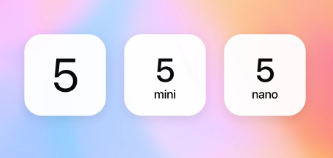
GPT-5 isn’t just one model — it’s a family designed for different needs:
Variant
Best For
Context Window
Knowledge Cut-Off
gpt-5
Deep reasoning & complex workflows
400,000 tokens
Sep 2024
gpt-5-mini
Faster, lower-cost with solid reasoning
400,000 tokens
May 2024
gpt-5-nano
Ultra-fast for real-time uses
400,000 tokens
May 2024
A real-time router automatically decides whether to use a fast model for quick queries or a “thinking” model for complex reasoning — so users never need to manually switch.
Why GPT-5 Is Different
While past models were impressive, GPT-5 brings together three game-changing strengths in one place:
1. Smarter Reasoning
GPT-5 adapts its thinking in real time. For complex queries, it breaks problems into smaller steps (a chain-of-thought process) before delivering an answer. This makes it far better at multi-stage problem solving, whether it’s debugging code or analysing layered business data.
2. Massive Context Handling
In ChatGPT, GPT-5 can remember around 256,000 tokens of context; via the API, that jumps to 400,000 tokens. This means it can process entire books, multi-hour meeting transcripts, or huge codebases without losing track.
3. Seamless Multimodal Skills
Switching between text, images, and voice is now smoother than ever. It also supports more languages with better translation accuracy and natural-sounding voice interactions in Spanish, Hindi, Japanese, Arabic, and beyond.
From Chatbot to AI Agent
GPT-5 isn’t just a “better chatbot.” It’s designed for AI agent-style execution, with built-in connectors to external tools, CRMs, databases, and productivity apps. This means GPT-5 can do more than talk — it can act.
Instead of running every task through expensive reasoning calls, it smartly routes simple requests to lightweight connectors, keeping costs down without losing power.
Up to 400K token context window (vs ~128K in GPT-4o)
45% fewer hallucinations (wrong or made-up answers)
More efficient outputs, using 50–80% fewer tokens
Sharper vision capabilities and more accurate multimodal alignment
Pricing & Access
OpenAI offers GPT-5 through ChatGPT and the API, with different cost points depending on the variant:
Model
Input / 1M Tokens
Output / 1M Tokens
gpt-5
$1.25
$10.00
gpt-5-mini
$0.05
$0.40
gpt-5-nano
$0.25
$2.00
Free Tier – Standard reasoning, daily limits
Plus Tier – Higher limits, improved performance
Pro Tier – “Thinking” variant, longer context, priority tools
If you want to chat casually, just open ChatGPT — GPT-5 is now the default model. If you want to integrate it into products or workflows, you’ll need API access via the OpenAI Platform or Python SDK.
How to Build with GPT-5
Whether you’re building a customer service bot, a Slack assistant, or a multilingual voice agent, GPT-5 makes it easier:
Define the role – Be specific about what your AI should do.
Feed it knowledge – Provide documents, pricing, FAQs, or internal guides.
Pick the right variant – Full reasoning (gpt-5), faster responses (mini), or ultra-low latency (nano).
Deploy anywhere – WhatsApp, Telegram, websites, or custom APIs.
User Reactions
Reactions have been mixed — some love the deeper reasoning and speed, others miss GPT-4o’s style. Still, it’s clear GPT-5 is a big architectural leap forward, and OpenAI is already adjusting based on community feedback.
Final Thoughts
GPT-5 isn’t just an update — it’s a unification of AI capabilities into one adaptable system. It’s smarter, more versatile, and ready for complex, real-world applications.
From multi-step reasoning to multilingual voice conversations, GPT-5 sets a new standard for what AI can do — and it’s only the beginning.
Tanu Vishwakarma, a seasoned social media marketer, possesses a passion for promoting businesses online. She specialises in crafting creative strategies to captivate potential customers. Her dedication to staying updated on industry trends ensures that her methods are always effective. Tanu thrives on helping businesses shine in the digital realm.
In early 2026, Microsoft made a surprising move that sent ripples through the tech industry—the company began canceling Claude Code licenses for most of its direct employees. Just six months […]
Artificial intelligence is no longer just a trend discussed by tech experts. It has become a practical tool that businesses of all sizes are using every day. From automating tasks […]
Google’s March 2026 core update is rolling out now, and the SEO industry is once again in watch-and-wait mode. Whenever Google pushes a broad core update, rankings can shift quickly, […]