The mobile app market continues to create new opportunities for businesses, entrepreneurs, and startups. As users increasingly rely on smartphones for shopping, financial management, entertainment, education, healthcare, productivity, and everyday services, businesses are looking for innovative mobile app ideas that can generate sustainable revenue.
In 2027, successful apps are likely to go beyond basic functionality. Artificial intelligence, personalisation, automation, subscription-based services, and seamless digital experiences can play an important role in creating apps that users are willing to pay for.
If you are planning to build a mobile application, choosing the right concept and monetisation strategy is just as important as the technology behind it.
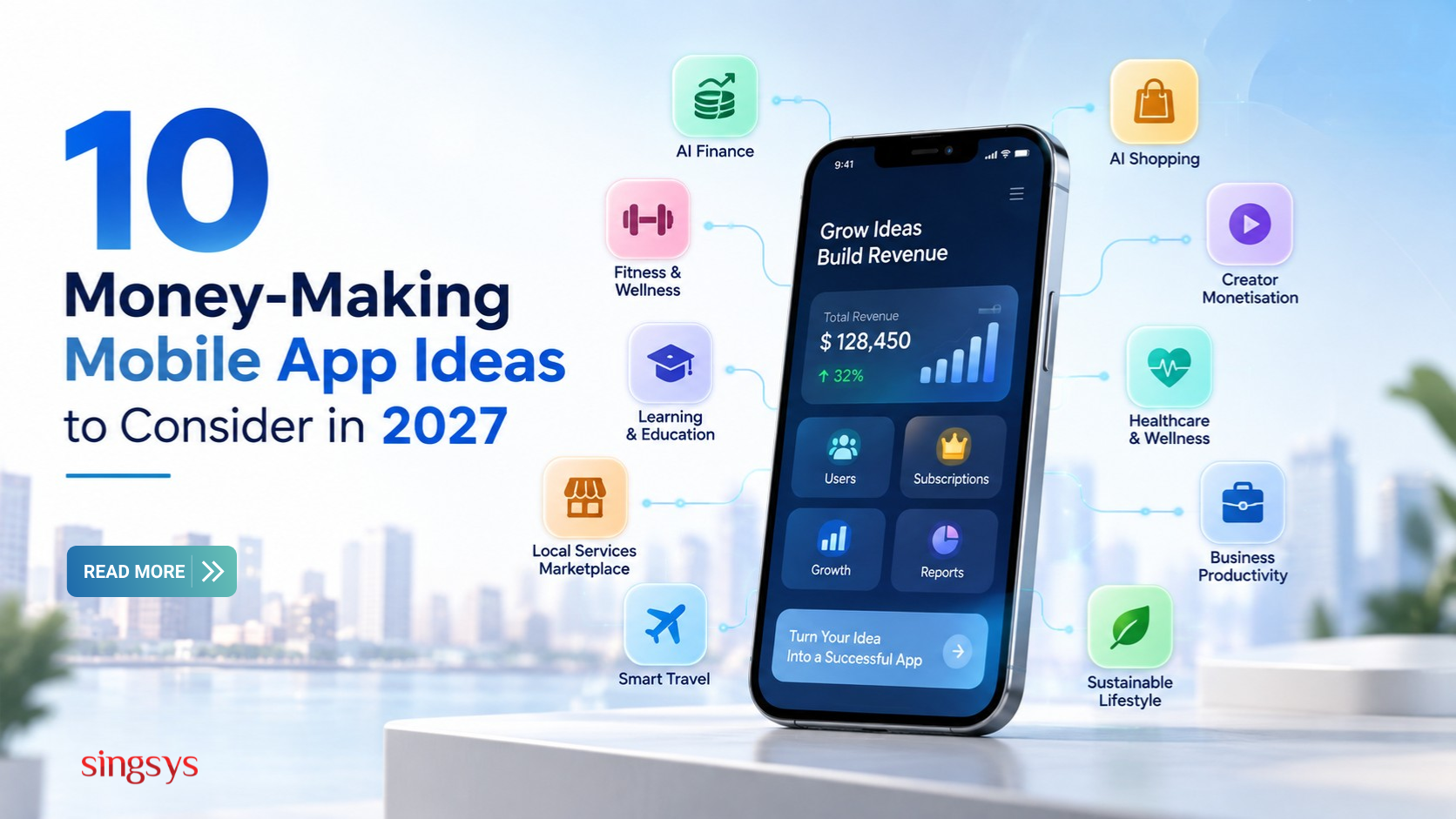
Here are 10 money-making mobile app ideas for 2027 worth considering.
Mobile applications have become an important digital channel for customer engagement, commerce, communication, and service delivery.
However, simply launching an app does not guarantee revenue. A profitable mobile app should solve a specific problem, offer a convenient user experience, and provide enough value to encourage users to return.
Modern technologies such as AI, machine learning, cloud computing, automation, and real-time analytics can help businesses create more personalised and intelligent mobile experiences.
Let’s explore some mobile app ideas with strong monetisation potential.
1. AI-Powered Personal Finance App
Managing personal finances can be complicated for users dealing with multiple accounts, subscriptions, expenses, investments, and financial goals.
An AI-powered finance app could help users track spending, categorise expenses, create budgets, identify recurring payments, and receive personalised financial insights.
Monetisation opportunities:
Premium subscriptions
Advanced financial insights
Affiliate partnerships
Financial product referrals
Premium budgeting tools
AI-powered recommendations can make the application more useful than a basic expense-tracking tool.
2. AI Fitness and Wellness App
Fitness applications are evolving from simple workout trackers into personalised digital wellness platforms.
A mobile app could use AI to create customised workout plans based on fitness levels, goals, available equipment, and user progress. It could also integrate nutrition tracking, activity monitoring, reminders, and wearable devices.
Monetisation opportunities:
Monthly or annual subscriptions
Premium workout programmes
Personalised AI coaching
Nutrition plans
Partnerships with fitness brands
The combination of personalisation and continuous progress tracking can encourage long-term engagement.
3. Personalised Learning App
Education is another area where mobile applications can create recurring revenue.
A personalised learning app could use AI to adjust lessons according to a user’s knowledge level, learning speed, interests, and performance.
Potential categories include language learning, professional skills, coding, exam preparation, financial literacy, and business education.
Monetisation opportunities:
Freemium plans
Premium courses
Monthly subscriptions
Certification fees
Institutional partnerships
Adding AI tutors, personalised quizzes, progress reports, and interactive learning experiences can further differentiate the app.
4. Local Services Marketplace App
Consumers increasingly look for convenient ways to discover and book local professionals.
A local services marketplace could connect customers with electricians, cleaners, tutors, fitness trainers, beauty professionals, repair specialists, photographers, or other service providers.
The app could support location-based discovery, reviews, scheduling, online payments, and real-time booking.
Monetisation opportunities:
Commission on transactions
Featured listings
Service-provider subscriptions
Advertising
Lead-generation fees
A well-designed marketplace can generate revenue from both service providers and customers.
A smart travel app could bring these tasks together and use AI to create personalised itineraries based on budget, travel dates, interests, group size, and preferred activities.
Additional features could include real-time travel updates, expense tracking, booking integrations, and itinerary sharing.
Monetisation opportunities:
Hotel and flight affiliate commissions
Premium itinerary features
Travel partner promotions
In-app advertising
Subscription plans
Personalisation can turn a generic travel guide into a digital travel assistant.
6. AI Shopping Assistant App
Online shoppers often spend considerable time comparing products, prices, reviews, and features.
An AI shopping assistant could help users find products based on their requirements and budget, compare options, summarise reviews, and provide personalised recommendations.
The app could potentially support multiple retailers and product categories.
Monetisation opportunities:
Affiliate commissions
Sponsored product placements
Premium shopping features
Brand partnerships
Advertising
The key is to make recommendations genuinely useful rather than simply turning the app into another advertising platform.
7. Creator Monetisation App
The creator economy continues to create opportunities for apps designed specifically around content creators.
A creator-focused mobile platform could combine content publishing, digital products, memberships, live sessions, community features, and payments.
For example, creators could sell courses, exclusive videos, templates, consultations, or digital downloads directly through the app.
Monetisation opportunities:
Transaction fees
Creator subscriptions
Premium accounts
Digital product commissions
Advertising
Providing creators with multiple revenue streams can increase the platform’s overall value.
8. Healthcare and Wellness Management App
Healthcare applications can simplify tasks such as appointment scheduling, medication reminders, health record management, wellness tracking, and communication with healthcare providers.
Depending on regulatory requirements and the target market, businesses can develop specialised apps for clinics, healthcare providers, patients, or wellness businesses.
Monetisation opportunities:
Subscription plans
Healthcare provider partnerships
Appointment commissions
Premium wellness features
B2B licensing
Security, privacy, regulatory compliance, and reliable data management should be considered from the beginning of development.
9. Business Productivity App
Businesses are constantly looking for ways to reduce repetitive work and improve team productivity.
A mobile productivity application could combine task management, team communication, document management, workflow automation, reporting, and AI-powered assistance.
For example, AI could summarise meetings, generate task lists, organise information, or provide insights from business data.
Monetisation opportunities:
Per-user subscriptions
Business plans
Enterprise licensing
Premium integrations
Usage-based pricing
B2B applications can offer recurring revenue when they become part of a company’s everyday workflow.
10. Sustainable Lifestyle App
Sustainability is becoming increasingly relevant to consumers and businesses.
A sustainability-focused app could help users track their carbon footprint, discover sustainable products, reduce household waste, find recycling locations, or participate in eco-friendly challenges.
Businesses could also use the platform to promote sustainable products and services.
Monetisation opportunities:
Brand partnerships
Sponsored listings
Premium features
Affiliate commissions
Business subscriptions
Gamification, rewards, challenges, and community features could help increase user engagement.
How to Monetise a Mobile App
Choosing a profitable app idea is only the first step. The monetisation model should match the application’s audience and value proposition.
Common mobile app monetisation strategies include:
Subscription: Charge users monthly or annually for premium access.
Freemium: Offer core functionality for free and charge for advanced features.
In-app purchases: Sell digital products, upgrades, or additional functionality.
Advertising: Generate revenue through relevant advertisements.
Commission: Take a percentage from transactions completed through the platform.
Affiliate marketing: Earn commissions by referring users to external products or services.
B2B licensing: Charge businesses for using the application or its technology.
A combination of monetisation models can also be used when it creates a better balance between user experience and revenue.
Build Your Next Profitable Mobile App
The most promising mobile app ideas for 2027 are likely to combine a clear customer need with personalisation, automation, and intelligent technology. From AI-powered finance and fitness applications to creator platforms, marketplaces, productivity tools, and smart travel apps, businesses have multiple opportunities to develop revenue-generating mobile experiences.
However, an app’s profitability depends on more than the idea. Market research, user experience, technology architecture, security, scalability, app performance, and a well-defined monetisation strategy all influence its long-term potential.
If you have a mobile app idea, partnering with an experienced mobile app development company can help transform the concept into a scalable application designed around your target users and business objectives.
Moving to Singapore is an exciting opportunity, whether you’re relocating for work, education, or business. Known for its modern infrastructure, efficient public services, and multicultural environment, Singapore offers an excellent […]
Launching an app is exciting, but getting the dreaded “Your app has been rejected” email from Apple can be frustrating. In 2026, the App Store review process has become stricter […]
The rapid growth of digital payments has transformed how businesses and consumers manage financial transactions. Whether you’re ordering food, shopping online, paying utility bills, or transferring money internationally, secure digital […]